High-Yield Savings Accounts 2026: Where to Park Your Money
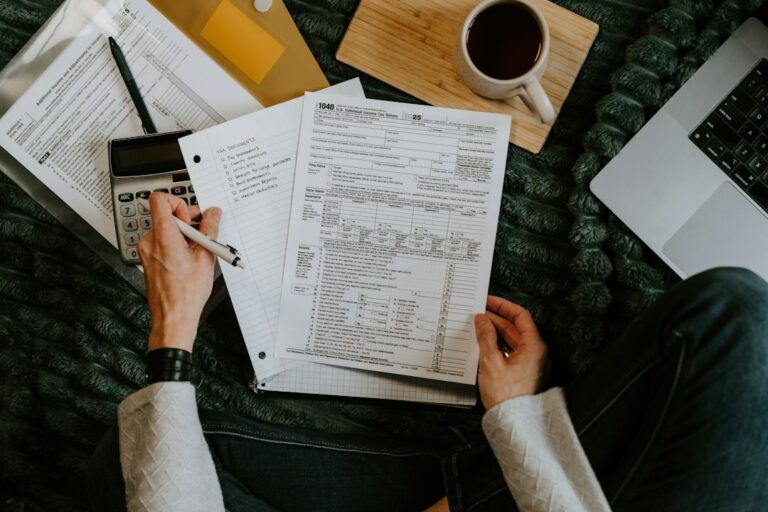
Photo by Jo Smiley Hailey on Unsplash
High yield savings account 2026 options are better than they’ve been in years — and if you’re sitting on $800 in a regular checking account earning basically nothing, you’re quietly losing ground every single month. That’s not a lecture. That’s just the math. The good news is that moving your money takes about 10 minutes, costs you nothing, and can earn you a meaningful amount more every year without any risk to your principal.
This post is for the person who knows they should probably be doing something smarter with their savings — but hasn’t gotten around to it yet. Maybe you’re just starting to build an emergency fund. Maybe you already have $3,000 sitting somewhere and you have no idea if it’s working for you. Either way, you’re in the right place. Let’s fix this today.
What Is a High-Yield Savings Account — and Why Does It Matter in 2026?
A high-yield savings account (HYSA) is a savings account that pays significantly more interest than a traditional bank account. That’s it. There’s no catch, no lockup period, and no minimum balance at most places. Your money is still FDIC-insured up to $250,000, which means it’s protected even if the bank fails.
The national average savings account interest rate in 2026 sits around 0.45% APY, according to Bankrate’s current savings rate data. The best high-yield savings accounts are paying noticeably more than the national average right now — check each bank’s current rate page directly, since rates move and any figure printed here may already be out of date. On a $5,000 emergency fund, that difference is roughly $225 per year. Not retirement money — but it’s free money you’re leaving on the table if you don’t make the switch.
The Real-Dollar Difference
Here’s what that looks like in practice. Say you have $3,000 saved right now:
- At 0.45% APY (traditional bank): you earn about $13.50 per year
- At 4.75% APY (top HYSA): you earn about $142.50 per year
That’s $129 more per year just for moving your money to a different account. It takes 10 minutes to open. You can still transfer money out whenever you need it. Nothing changes except the number going up faster.
The Best High-Yield Savings Accounts in 2026
You don’t need to spend hours comparing every option. Here are the accounts most people are using in 2026 — all of them solid, FDIC-insured, and genuinely easy to open online.
Marcus by Goldman Sachs
Marcus is one of the most popular HYSAs for good reason. There’s no minimum balance, no monthly fees, and the APY has been consistently competitive. It’s straightforward and easy to link to your existing checking account. Transfers typically take 1-3 business days.
Ally Bank
Ally has been a go-to recommendation for years. Their savings account has no minimum balance, no monthly maintenance fees, and a solid rate. What makes Ally stand out is the “buckets” feature — you can label portions of your savings for different goals (emergency fund, vacation, car repair) without opening multiple accounts. Really useful if you’re juggling a few savings targets at once.
SoFi High-Yield Savings
SoFi pays a higher rate if you set up direct deposit, which bumps your APY up noticeably. If your paycheck is going into SoFi, the rate is among the best available right now. The account also comes with no fees and integrates with SoFi’s other financial tools if you use them.
Fidelity Cash Management Account
If you’re already investing through Fidelity, their Cash Management Account functions like a high-yield savings account and keeps your emergency fund right next to your investment accounts. This is genuinely convenient when you’re starting to do both — save and invest — at the same time.
Capital One 360 Performance Savings
Capital One has been in the high-yield savings game for a long time. The interface is clean, there’s no minimum balance, and if you already have a Capital One credit card, everything lives in one place. Competitive rates and easy to use.
Important note: Rates change. None of these accounts are guaranteed to stay at any specific APY forever. The point isn’t to chase the absolute highest rate every month — it’s to be in the ballpark of the best rates rather than stuck at 0.45%.
What to Look for in a High-Yield Savings Account
When you’re comparing options, focus on these four things. Everything else is noise.
- APY (Annual Percentage Yield): This is your interest rate. Higher is better, all else equal. Compare current APYs directly on each bank’s website before opening — rates shift with the federal funds rate and the right threshold depends on what’s actually available when you apply.
- No monthly fees: A fee will eat your interest earnings fast. Every account on this list charges zero.
- FDIC insurance: Non-negotiable. FDIC insurance protects your deposits up to $250,000 per bank, per account type. Always verify this before opening.
- Easy transfers: You want to be able to move money into and out of this account without a hassle. Standard bank transfers should be free and straightforward.
Honestly, you can skip any account with a monthly fee, a minimum balance requirement over $1, or a complicated rate structure. There are too many no-fee options in 2026 to settle for anything less.
What to Actually Use a High-Yield Savings Account For
A HYSA is not an investment account. The interest it earns will not beat inflation over the long run, and it’s not meant to. It’s a parking spot for money you need to keep safe and accessible — and if you’re weighing it against a CD, our CD vs HYSA comparison can help you decide which fits your situation best.
The three things it’s genuinely perfect for:
- Your emergency fund. This is the main event. You want 3-6 months of expenses in cash — easy to access, not at risk, earning something while it sits there. If you’re still building yours, a HYSA is exactly where that money should live while you grow it. If you want help figuring out how much you actually need, read our post on what to do once your emergency fund is funded.
- Short-term savings goals. Money you’re saving for something in the next 6-24 months — a car repair fund, a move, a planned vacation — should be in a HYSA. You can’t afford to have it go down in value, so the stock market isn’t right for it. But it should still be earning something.
- A buffer before investing. If you’re just starting out and still deciding what to do next, keeping your cash in a HYSA while you figure it out is better than letting it sit in checking earning nothing. Once you’re ready to take that next step, understanding how to start investing as a late starter will help you put that money to work.
What it’s NOT for: money you won’t need for 5+ years. That belongs in investments, not savings. Keeping $20,000 in a HYSA because it feels “safer” than investing is costing you real money over time. But one thing at a time — get the emergency fund right first.
Step by Step: How to Open a High-Yield Savings Account
This process is simpler than most people expect. Here’s exactly what to do.
- Pick one account from the list above. Don’t overthink it. Marcus, Ally, SoFi, Fidelity, and Capital One 360 are all excellent. Pick the one that makes sense for your situation and move forward.
- Go to the bank’s website and click “Open an Account.” You’ll apply online. No branch visit required.
- Have your information ready. You’ll need your Social Security number, a government-issued ID, and your current bank account and routing number to fund the new account.
- Make your opening deposit. Some accounts have no minimum. Some ask for $1. Either way, even $50 works. You don’t have to move everything at once.
- Set up a recurring transfer. After your account is open, set up an automatic transfer from your checking account — even $25 or $50 per week. Automatic transfers are the single most effective savings habit there is. The money moves before you can spend it.
- Leave it alone. Check the balance every couple of weeks if you want, but don’t touch it unless it’s a real emergency. That’s literally what it’s for.
That’s the whole process. Most people have their account open within 15-20 minutes.
What If You Can Only Save a Little Right Now?
If you’re dealing with credit card debt at the same time, you might be wondering whether a savings account is even worth it while you’re paying a high APR on a balance — check your cardholder agreement for your exact rate, because it matters for the math. That’s a fair question. The honest answer: yes, you should still have a small emergency fund — even while paying down debt.
Here’s the logic. Without any savings, every unexpected expense goes back onto the credit card. You never actually break the cycle. The goal is to build a small $1,000 buffer first, then attack the debt hard. Once the debt is gone, you redirect that payment toward building a full 3-6 month emergency fund in your HYSA.
If you’re still figuring out the debt side of things, our post on debt snowball vs. avalanche breaks down exactly how to choose a payoff strategy.
Even $25 a week adds up. Here’s the real math:
- $25/week for 6 months = $650
- $50/week for 6 months = $1,300
- $100/week for 6 months = $2,600
Put that $2,600 and whatever APY the account is currently offering into a savings calculator and you’ll see exactly what the first year earns — the figure is whatever the current rate actually is, and no printed number here will stay accurate. Not a fortune — but you also didn’t have $2,600 six months ago. That’s the point.
What to Do This Week
Here is your one action item. Just one.
Open a high-yield savings account this week. Pick Ally or Marcus if you’re not sure which one. Go to the website right now. Have your Social Security number, your ID, and your bank account number on hand. It takes 10-15 minutes. Fund it with whatever you can — $50, $100, $500. Then set up an automatic transfer of even $25 a week from your checking account.
That’s it. You don’t need to figure out the whole plan today. You just need to stop leaving money on the table in a checking account earning 0.01% when you could be in a HYSA earning 4.75%.
You’re not behind because you’re bad with money. You’re behind because nobody taught you this stuff. The people who are ahead aren’t smarter — they just made a few specific decisions earlier, like choosing the right savings vehicles and understanding how compound interest works in their favor over time. You can make those same decisions right now, and you will catch up. But only if you start.
Get Real Money Advice.
No get-rich-quick. No fluff. Just honest help with money — straight to your inbox.
Drop your email below. Weekly. No spam. Unsubscribe anytime. ↓