
HYSA vs Money Market Account: Which Is Right for You
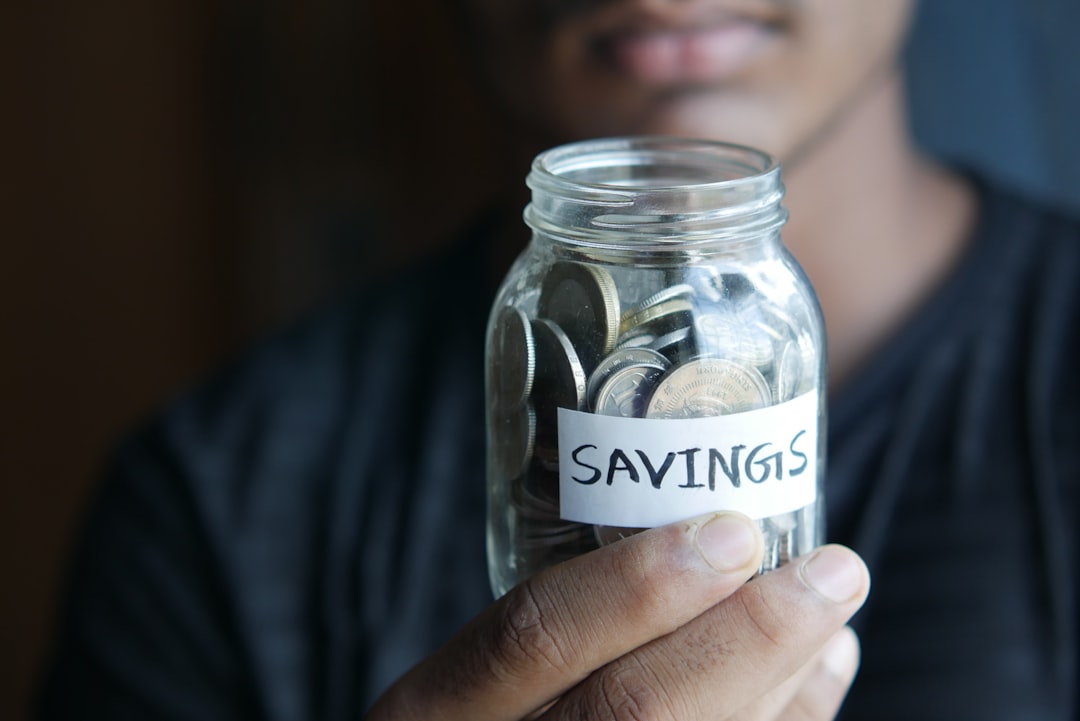
Photo by Towfiqu barbhuiya on Unsplash
By The Money Floor Editorial Team · Source-verified · Last updated September 2026
Both a HYSA and a money market account will pay you more interest than a standard savings account, but they work differently, and choosing the wrong one can cost you flexibility or money. Most people land on this comparison because they’re finally doing the right thing: building an emergency fund or parking cash somewhere it earns something instead of nothing. The choice isn’t complicated once you understand what you’re actually comparing. This post breaks down both options in plain English, shows you the real differences, and tells you exactly which one fits your situation.
Key Takeaways
- A high-yield savings account (HYSA) is the simpler option: deposit money, earn interest, withdraw when needed, with no minimum balance at most online banks.
- Both top HYSAs and money market accounts at the same institutions are paying meaningfully more than a traditional savings account right now, check current rates directly with the institution before you open an account, because they move with the federal funds rate and any figure we print here can be out of date by next week.
- If you’re building your first emergency fund and have under $10,000 saved, open a HYSA this week at a bank like Marcus, Ally, or Fidelity, no minimums, no friction.
- Money market accounts are worth considering if you want check-writing privileges or have $10,000+ to deposit and can meet a higher minimum balance requirement.
Option A: High-Yield Savings Account (HYSA)
A high-yield savings account is exactly what it sounds like: a savings account that pays a much higher interest rate than what your local bank or credit union typically offers. The national average savings rate is strikingly low: as of August 2026, the FDIC’s national average was just 0.38% APY for savings accounts. Top online HYSAs pay several times that, because their rates track the federal funds rate, which the Federal Reserve reported at 3.63% in August 2026, rather than the near-zero rate a big branch bank can get away with paying. The gap between the national average and the best online rates is large enough to matter on any balance worth calling an emergency fund. The difference is almost entirely explained by overhead: online-only banks have no branches, fewer employees, and pass those savings to you as interest.
Opening one takes about 10 minutes. You link your checking account, transfer money in, and your balance starts earning interest immediately. Most HYSAs are FDIC-insured up to $250,000 per depositor, which means your money is federally protected. You’re not taking any risk here.
HYSA Pros
- Simple to open and use, even if you’ve never done it before
- No minimum balance at most online banks (Marcus, Ally, and Discover all start at $0)
- Interest compounds daily and is credited monthly at most institutions
- FDIC-insured up to $250,000
- Easy to automate transfers from your checking account
HYSA Cons
- Rates are variable, they move up or down with the federal funds rate
- No check-writing ability
- Some banks still cap monthly savings withdrawals; the Federal Reserve removed the old six-per-month federal limit in 2020, so each bank now sets its own policy
- Money is slightly less accessible than a checking account (transfers usually take a few business days)
Who a HYSA Is For
A HYSA is the right starting point for almost everyone building a financial floor. If you’re working on your emergency fund or trying to park $1,000 to $10,000 somewhere safe, a HYSA is the answer. It’s also perfect if you’ve got zero experience with anything beyond a standard savings account. The barrier to entry is low, the risk is zero, and the process is nearly automatic once you set it up.
You don’t need to understand much about finance to benefit from a HYSA. That’s the point.
Option B: Money Market Account (MMA)
A money market account is a deposit account offered by banks and credit unions that typically pays higher interest than a standard savings account and comes with some features you don’t get with a HYSA, namely, a debit card and check-writing privileges. That makes it a hybrid: somewhere between a savings account and a checking account in terms of how you can use it.
Money market accounts are also FDIC-insured (or NCUA-insured at credit unions), so your deposits are protected the same way they would be in a HYSA. The main practical difference is access. With a money market account, you can write a check directly from the account or use a debit card. You can’t do that with a standard HYSA.
Money market account vs. money market fund: don’t confuse the two
A money market account (MMA) is a bank deposit. It is insured by the FDIC up to $250,000 per depositor, per bank, or by the NCUA to the same $250,000 limit at a credit union. A money market fund is a different product entirely: an investment you buy through a brokerage. According to the SEC, money invested in a money market fund is not guaranteed by the FDIC and can lose value. This article is about the insured bank account, not the fund.
The catch: many money market accounts require a higher minimum balance to earn the top rate or to avoid monthly fees. Some institutions require $2,500 to $10,000 or more to open, and the APY may drop significantly if your balance falls below that threshold. As of August 2026, the FDIC’s national average for money market accounts was 0.63% APY, slightly ahead of the 0.38% savings average but still far below what top online accounts pay. The best online money market accounts pay several times the national average, competitive with the best HYSAs, but often with strings attached, and the exact rate changes week to week, so confirm the current APY with the institution before you open.
Money Market Account Pros
- Check-writing and sometimes debit card access
- Competitive APY, often at or slightly above the best HYSAs
- FDIC or NCUA insured, same as a regular savings account
- Good option if you want cash accessible but not sitting in your regular checking account
Money Market Account Cons
- Higher minimums at many banks, sometimes $2,500 to $10,000 to get the advertised rate
- Monthly fees if your balance drops below the minimum
- More confusing than a HYSA, more rules to track
- Rates are still variable, just like a HYSA
Who a Money Market Account Is For
A money market account makes sense if you already have a healthy emergency fund built and you want a bit more flexibility in how you access that cash, though it’s worth understanding how a money market fund compares to a HYSA before you decide which direction to go. It’s also worth considering if you’re self-employed and want a dedicated account for taxes or irregular expenses where check-writing is useful. If you’re still building your first $1,000 or $2,000 in savings, skip the money market account for now, the minimums and complexity aren’t worth it at that stage, and using a money market account for retirement comes with its own hidden costs worth understanding before you go further.
HYSA vs Money Market Account: Side-by-Side
| Factor | HYSA | Money Market Account |
|---|---|---|
| National average APY (FDIC, Aug 2026) | 0.38% | 0.63% |
| Top online accounts | Several times the national average; varies weekly | Several times the national average; varies weekly |
| Minimum to Open | $0 at most online banks | $0 to $10,000 depending on bank |
| Check Writing | No | Often yes |
| Debit Card Access | Usually no | Sometimes yes |
| FDIC/NCUA Insured | Yes | Yes |
| Risk to Principal | None | None |
| Rate Type | Variable | Variable |
| Best For | Emergency fund, beginners | Larger balances, check access |
| Complexity | Low | Medium |
Both accounts are federally insured and both pay meaningfully more than a traditional savings account, though if you’re also weighing a CD vs. HYSA, that’s a separate comparison worth reading. Because a top HYSA and a top money market account both track the same federal funds rate, they usually pay within a narrow band of each other. Look up current rates at a comparison site like Bankrate or NerdWallet to see exactly where the gap sits today. As a rough illustration, half a percentage point of extra yield on a $5,000 balance works out to about $25 a year: real money, but not a reason to overcomplicate your decision.
Which One Should You Actually Choose?
Here’s a straight answer based on where you actually are right now.
If you’re building your emergency fund from scratch
Open a HYSA. Full stop. You don’t need check-writing access on money you’re supposed to leave alone, and you don’t want minimum balance requirements hanging over you while you’re still building the account up. A HYSA at Marcus, Ally, or Fidelity takes 10 minutes to open with $0 down. If you automate $200 a month into it, that’s $1,200 in 6 months and $2,400 in a year by simple arithmetic, all earning a high-yield rate instead of sitting idle while you sleep. Check out our guide on automating your finances for the exact setup process.
If you already have $10,000 or more saved
At this balance, it’s worth shopping money market accounts. Rates at this tier vary by institution and change frequently, so compare current offers directly before committing, check-writing access can be genuinely useful if you’re a freelancer, small business owner, or someone who occasionally needs to pay a large bill directly from savings. The higher rate on a larger balance starts to add up. On $20,000, half a percentage point of extra yield works out to about $100 a year: not life-changing, but not nothing either.
If you’re trying to decide where to put a tax refund or windfall
For a one-time chunk of cash you want accessible within a few months, either account works. If it’s under $5,000, a HYSA is simpler. If it’s over $10,000 and you want to keep some flexibility, compare money market offers at your current bank and online options. Our post on what to do with your tax refund covers this in more detail.
If you’re confused about whether this money should be invested instead
This is the right question to ask. Emergency fund money belongs in a HYSA or money market account, not the stock market. But if you’ve already got 3-6 months of expenses covered and you’re looking for somewhere to grow long-term savings, that cash probably belongs in an investment account, not a savings vehicle. Read our breakdown on your first $1,000 invested if you’re not sure where to go from here.
What if you can only afford $50 a month right now?
Open a HYSA with no minimum balance requirement and automate $50 a month. After 6 months, you’ll have $300 earning interest. After a year, $600. It won’t feel like much, but $600 in a high-yield account earning several times the national average is better than $600 sitting in a near-zero checking account, and it’s infinitely better than $0 saved. The habit matters as much as the amount. Don’t let a small number stop you from starting.
One more thing worth saying clearly: neither of these accounts is an investment. They won’t build wealth on their own. A high-yield savings account, whatever rate it pays, is designed to protect and hold money, not to grow it significantly above inflation over time. These accounts are for money you need to protect and access, not money you’re trying to grow. Once your floor is built, the next step is putting money to work in a Roth IRA or index fund, not keeping more cash in savings accounts.
Frequently Asked Questions
What is the difference between a HYSA and a money market account?
A high-yield savings account (HYSA) is a deposit account that pays significantly more interest than a traditional savings account, typically with no minimum balance and no check-writing access. A money market account is similar but usually includes check-writing privileges and sometimes debit card access, often requiring a higher minimum balance to earn the top rate. Both are FDIC-insured and carry no risk to your principal.
Which pays more interest in 2026: a HYSA or a money market account?
They are close, and both depend far more on whether you choose a high-yield account than on the HYSA-versus-MMA label. As of August 2026 the FDIC national averages were 0.38% APY for savings and 0.63% for money market accounts, but top online accounts in both categories pay several times those averages. Because rates move with the federal funds rate and can change within days, check current offers at a few institutions directly. As a rough illustration, half a percentage point of difference on a $5,000 balance is about $25 a year: real, but not a deciding factor for most people.
Is a money market account safe?
Yes, a money market account at a bank is safe: it is FDIC-insured up to $250,000 per depositor, per institution, the same as a regular savings account, and credit union money market accounts are NCUA-insured to the same limit. One caution: a money market account is not the same as a money market fund. A fund is a brokerage investment that, according to the SEC, is not FDIC-insured and can lose value. As long as you are opening an insured bank or credit union account, your principal is protected regardless of what happens to interest rates or the economy.
Can I use a HYSA as my emergency fund?
A HYSA is actually the ideal place for an emergency fund. It keeps your money separate from your everyday spending (which reduces the temptation to dip into it), pays meaningful interest while you wait, and allows withdrawals when you need them. Most online HYSAs let you transfer money to your checking account usually within a few business days.
What’s the minimum balance for a high-yield savings account?
Many online banks including Marcus by Goldman Sachs, Ally, and Discover offer HYSAs with no minimum balance to open and no minimum to earn the advertised rate. Some brick-and-mortar banks offer money market accounts with minimums of $2,500 to $10,000, and your rate may drop if you fall below that threshold. Always read the fine print before opening.
Should I put my savings in a HYSA or just invest it?
Emergency fund money (3-6 months of expenses) belongs in a HYSA or money market account, not the stock market. Savings you might need within 1-2 years should also stay liquid. Only money you can leave untouched for 5 or more years should go into investments like index funds or a Roth IRA. The two serve different purposes and you likely need both.
Is a high-yield savings account worth it?
Yes, for money you need to keep safe and easy to reach. The national average savings rate was just 0.38% APY in August 2026 (FDIC), while top online high-yield accounts pay several times that for the same federal insurance and similar access, so on an emergency fund of a few thousand dollars the extra interest is real money for essentially no added risk or effort. A HYSA will not grow wealth or beat inflation over the long run, though, so it is worth it for your cash cushion, not for money you could invest for five or more years.
Get Real Money Advice.
No get-rich-quick. No fluff. Just honest help with money — straight to your inbox.
Drop your email below. Weekly. No spam. Unsubscribe anytime. ↓