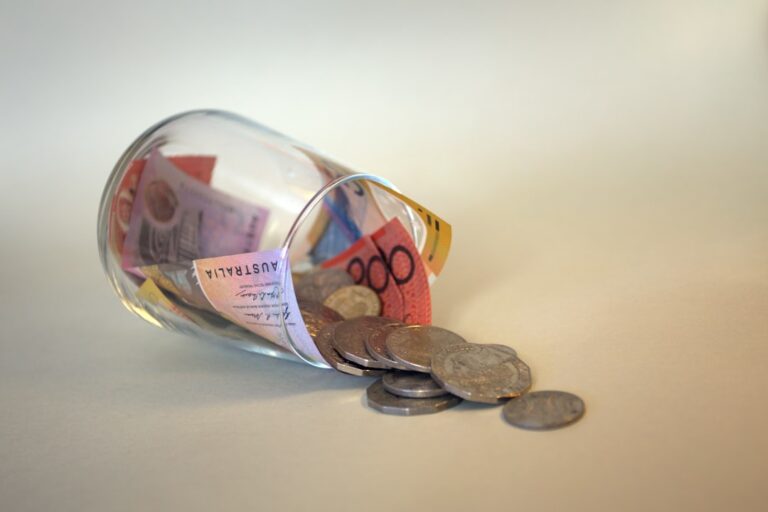

11 Emergency Fund Statistics That Show You’re Not Behind
Photo by Emil Kalibradov on Unsplash
By The Money Floor Editorial Team · Source-verified · Last updated July 2026
Most Americans don’t have a fully funded emergency fund, and the data proves it. If you’ve got $400 in savings, a half-empty checking account, or nothing set aside at all, you are not an outlier. You are statistically normal. These 11 emergency fund statistics from sources like the Federal Reserve, the FDIC, and the Bureau of Labor Statistics show exactly how common your situation is — and what realistic progress actually looks like for people starting from zero.
Key Takeaways
- According to the Federal Reserve’s 2023 Report on the Economic Well-Being of U.S. Households, 37% of Americans could not cover a $400 emergency expense without borrowing money or selling something.
- Saving $50 per week for 12 months builds a $2,600 emergency fund — enough to cover one month of essential expenses for many households — even if you start today.
- High-yield savings accounts at online institutions pay meaningfully more than a traditional bank savings account, meaning your emergency fund actually earns money while it sits there — check each bank’s current rate directly, since APYs move with the federal funds rate.
- The most common mistake is waiting until debt is gone to start an emergency fund — experts and the data both say even $500 in savings reduces financial crisis risk significantly.
The Emergency Fund Gap Is Enormous (And You’re In Good Company)
The numbers on emergency savings are jarring. Not because you should feel scared, but because they make one thing crystal clear: the system was never set up to make this easy. These aren’t stats about lazy people or bad choices. They’re stats about real wages, real costs, and a real gap between income and expenses that millions of households deal with every month.
Stat 1: 37% of Adults Can’t Cover a $400 Emergency
37% of U.S. adults said they would struggle to pay an unexpected $400 expense without borrowing or selling something, according to the Federal Reserve’s 2023 Report on the Economic Well-Being of U.S. Households. That’s more than one in three adults. If you’re sitting on almost nothing right now, you are in the same boat as tens of millions of people who also have jobs, pay bills, and are trying to figure it out.
The practical takeaway: $400 is the floor, not the goal. But it’s a real starting point. If you don’t have $400 in a separate savings account yet, that’s your first target.
Stat 2: Only 44% of Americans Have 3 Months of Expenses Saved
Only 44% of Americans have enough savings to cover three months of expenses, according to Bankrate’s 2024 Emergency Savings Report. That means 56% of the country doesn’t meet the minimum recommendation. The “3-to-6-month emergency fund” standard sounds achievable in theory. But in practice, most people aren’t there.
Three months of expenses looks different for every household — take your own monthly essential spending and multiply by three to find your real target, because the number that matters is yours, not a national average. That’s not a number you hit in a weekend. It’s a number you build over 12 to 24 months of consistent saving. Slow and steady is still winning if you’re moving.
Stat 3: The Personal Saving Rate Is Just 3.0% Right Now
The U.S. personal saving rate is 3.0% as of May 2026, according to the Bureau of Economic Analysis via FRED. That means on a $60,000 annual income, the average American is saving roughly $1,800 per year, or about $150 per month. No wonder emergency funds stay thin.
This isn’t about willpower. It’s about math. When housing costs, groceries, and debt payments eat 95% or more of take-home pay, there’s nothing left to save. The fix isn’t to feel worse about yourself. The fix is to find $50 or $100 somewhere — and automate it before it disappears. Check out how to automate your finances before willpower runs out for a practical way to do this.
Why Your Emergency Fund Isn’t Built Yet (The Real Reasons)
There’s a lazy narrative that people don’t save because they’re buying coffee and streaming services. The data tells a different story. The actual culprits are wages that haven’t kept pace with costs, debt that eats into every paycheck, and a system that makes spending easier than saving.
Stat 4: 60% of Americans Live Paycheck to Paycheck
60% of Americans report living paycheck to paycheck, according to LendingClub’s 2024 Paycheck to Paycheck Report. That number includes people earning over $100,000 a year. Income alone doesn’t fix the problem. Spending structure does.
If you feel like you never have money left over at the end of the month, you’re not imagining it. And you’re not alone. The path out starts with budgeting when you’re living paycheck to paycheck — not perfecting your budget, just getting control of the basics first.
Stat 5: Credit Card Debt Is Making It Harder
The average credit card APR is 21.0% as of February 2026, per the Federal Reserve. If you’re carrying a balance, you’re fighting a two-front war: trying to save while also paying expensive interest. This is one of the most common reasons emergency funds never get built. Every month you carry debt, you’re paying a premium that could have gone to savings.
The fix isn’t to choose one over the other completely. Build a starter emergency fund of $500 to $1,000 first, then attack the credit card debt with a real payoff plan. Having even a small buffer stops you from going back to the credit card every time something breaks.
Stat 6: Inflation Has Eroded Real Buying Power for Three Straight Years
CPI inflation is running at 4.3% year-over-year as of May 2026, according to the Bureau of Labor Statistics. That means a grocery trip that cost $200 last year costs about $208 now. Over three years of elevated inflation, the cumulative damage to household budgets has been significant. It’s harder to save today than it was in 2020 — and that’s a real economic fact, not an excuse.
The practical response: emergency fund goals need to be recalculated upward. If your target was $5,000 two years ago, $5,500 to $6,000 is probably more accurate now. Saving money on a low or stretched income in 2026 requires different tactics than it did before inflation spiked.
Stat 7: 1 in 4 Workers Has No Paid Sick Leave
About 25% of private sector workers have no access to paid sick leave, according to the Bureau of Labor Statistics’s 2024 National Compensation Survey. One bad illness, one week out of work, and the paycheck disappears. This is exactly the scenario an emergency fund exists to cover.
If you’re in a job without paid sick leave, your emergency fund target needs to be higher, not lower. Aim for at least two months of expenses rather than the commonly cited “start with $1,000.” Your risk is real and it’s documented.
What the Data Says About People Who Built Their Emergency Fund Anyway
Here’s where things get genuinely useful. The statistics on people who successfully built emergency funds show a consistent pattern: they didn’t start big, they didn’t wait until debt was gone, and they used separate accounts. That’s it. That’s the playbook.
Stat 8: Automatic Transfers Are the #1 Success Factor
People who automate savings are significantly more likely to reach their goals than those who try to save “whatever’s left,” according to research cited by the Consumer Financial Protection Bureau’s saving tools research. Waiting to save what’s left at the end of the month almost never works. The money disappears into small spending decisions before it gets moved.
Set up an automatic transfer of $25, $50, or $100 to a separate savings account on the day after payday. You won’t miss it the same way. This one structural change is more powerful than any budgeting app or motivation hack.
Stat 9: A Separate Account Makes a Measurable Difference
Account separation reduces unintentional spending of emergency funds by creating a psychological and physical barrier, according to behavioral economics research published by the National Bureau of Economic Research. When emergency savings sit in your main checking account, they’re invisible and spendable. In a separate account with a different institution, they’re harder to touch impulsively.
High-yield savings accounts solve both problems. They’re separate from your checking account and they earn actual interest. In 2026, online institutions like Marcus by Goldman Sachs and Ally Bank are paying substantially more than the national average savings rate — check each bank’s account page directly for the current APY, since rates move with Fed policy. That means a $3,000 emergency fund earns about $135 per year just sitting there. Not life-changing, but real money for doing nothing.
Stat 10: Small Savers Still Make Real Progress
Here’s the math that actually matters. Saving $50 per week for 12 months produces $2,600. Saving $100 per week for 12 months produces $5,200. These aren’t huge numbers. But they’re fully funded starter emergency funds that didn’t exist before.
People who are behind on savings consistently overestimate how much they need to save per month to make meaningful progress. The BLS publishes median weekly earnings for full-time workers each quarter in its Usual Weekly Earnings release — look up the current figure at bls.gov to see where your own income sits relative to the median. At that income, $50/week is about 4.3% of gross pay. That’s within reach. Barely, for some people. But within reach.
| Monthly Savings Amount | 6 Months | 12 Months | 24 Months |
|---|---|---|---|
| $50/month | $300 | $600 | $1,200 |
| $100/month | $600 | $1,200 | $2,400 |
| $200/month | $1,200 | $2,400 | $4,800 |
| $300/month | $1,800 | $3,600 | $7,200 |
The Last Two Stats Are the Ones That Should Motivate You
The statistics so far have been about how common the problem is. These last two are about what actually changes when people get even a small emergency fund in place. Because the whole point isn’t the number in the account. It’s what that number does to your life.
Stat 11: Even $250 in Savings Reduces Financial Crisis Risk
Households with as little as $250 in savings were less likely to experience hardship after a financial shock than households with nothing, according to an Urban Institute study. The gap between zero and $250 is bigger than the gap between $250 and $2,500. That first small pile of money changes your behavior, your options, and your stress level in ways that are measurable.
Start there. Don’t wait until you can fund a full three-month emergency fund. Put $250 in a high-yield savings account this week. Then build from there. Check out our complete guide to building an emergency fund in 2026 for the full step-by-step breakdown.
What to Do With This Information
These numbers aren’t meant to depress you. They’re meant to show you that you are exactly where most people are — and that the path forward is documented and repeatable.
You don’t need a windfall. You don’t need to make six figures. You need a separate account, an automatic transfer, and a first target of $500. After that, you raise the target. After that, you start thinking about the next step — whether that’s tackling debt with a real plan like the debt avalanche method or figuring out where to park a growing emergency fund between a high-yield savings account and a money market account.
The statistics in this post show you’re not behind. It also shows that the people who make progress start before they feel ready.
Your Emergency Fund Quick-Start Checklist
- Open a high-yield savings account at a separate bank from your checking account (Marcus, Ally, and SoFi all have no-minimum options in 2026)
- Set up an automatic transfer for whatever you can afford — even $25/week counts
- Set your first milestone at $500, then $1,000, then one month of expenses
- Don’t touch it for anything that isn’t a genuine emergency (a sale is not an emergency)
- Recalculate your target every six months as your expenses change
Frequently Asked Questions
How much should I have in an emergency fund in 2026?
Most financial experts recommend three to six months of essential living expenses. For a household spending $3,500 per month on essentials, that’s a target of $10,500 to $21,000. But the realistic starting goal is $500 to $1,000, which already reduces financial crisis risk significantly according to Urban Institute research. Build to one month first, then reassess.
Where should I keep my emergency fund in 2026?
A high-yield savings account (HYSA) at an online bank is the standard recommendation. In 2026, online institutions like Ally, Marcus by Goldman Sachs, and SoFi are paying substantially more than a traditional savings account — visit each bank’s site for the current APY, since rates shift with the federal funds rate. The key is keeping it separate from your everyday checking account so you don’t accidentally spend it.
Is it normal to have no emergency fund?
Yes, statistically normal. According to the Federal Reserve’s 2023 Report on the Economic Well-Being of U.S. Households, 37% of Americans couldn’t cover a $400 emergency without borrowing or selling something. More than half of Americans don’t have three months of expenses saved. Having no emergency fund is common — it doesn’t mean you’ve failed.
Should I pay off debt before building an emergency fund?
Build a small emergency fund first — at least $500 to $1,000 — before putting all extra money toward debt, and if you’re unsure whether your emergency fund or 401k match should come first, that question is worth settling early too. Without a buffer, any unexpected expense sends you right back to the credit card, resetting your progress. Once you have that starter fund, focus aggressively on high-interest debt. The two goals work together, not against each other.
How long does it take to build a 3-month emergency fund?
At $200 per month, a $6,000 emergency fund takes 30 months — just under 2.5 years. At $300 per month, you get there in 20 months. The timeline feels long, but how fast you reach that first milestone depends entirely on what you automate and how often you leave it alone — run the math on your own transfer amount to see your personal timeline. Start with whatever you can automate today.
What counts as an emergency fund emergency?
Job loss, unexpected medical bills, a major car repair needed to get to work, or a sudden home repair that makes the house unlivable. A sale at your favorite store is not an emergency. A vacation is not an emergency. The mental test: would this expense threaten your ability to work, stay housed, or stay healthy? If yes, it’s an emergency.
Get Real Money Advice.
No get-rich-quick. No fluff. Just honest help with money — straight to your inbox.
Drop your email below. Weekly. No spam. Unsubscribe anytime. ↓