
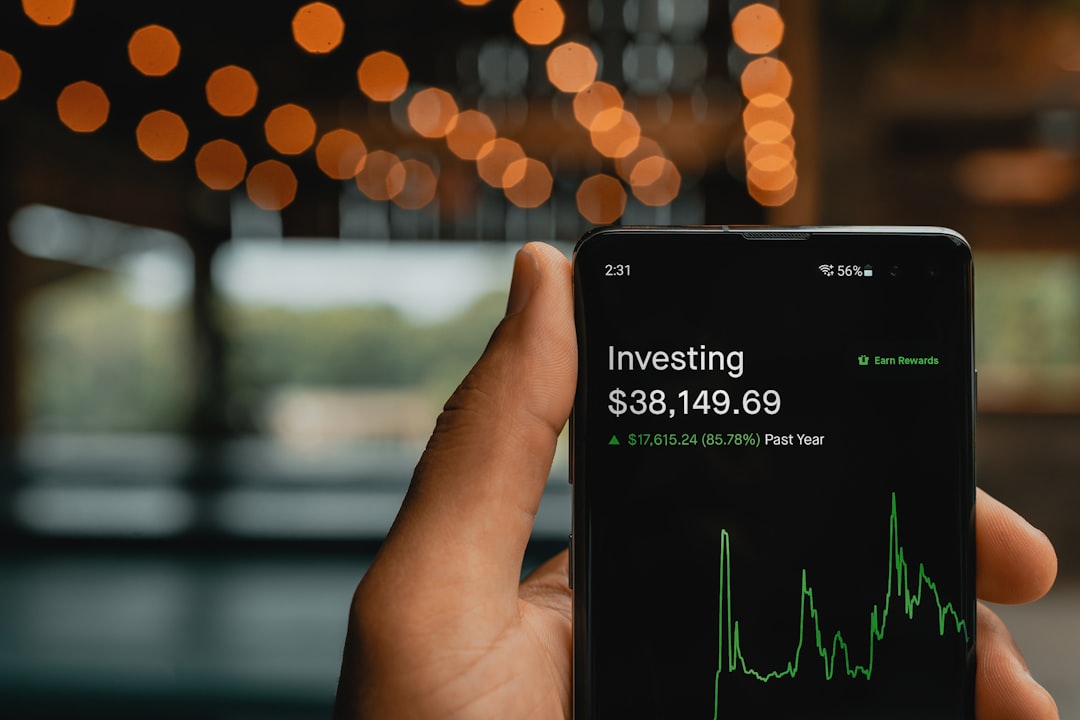
How to Start Investing: A Complete Guide for Late Starters
Photo by PiggyBank on Unsplash
By The Money Floor Editorial Team · Reviewed for accuracy · Last updated June 2026
You can start investing today — even if you’re 40, even if you only have $50, and even if you’ve never bought a stock in your life. The idea that investing is only for people who started in their 20s or people who already have money is the single most expensive myth in personal finance. According to the IRS, the 2026 contribution limits alone give late starters meaningful room to build real wealth — and the math, even on a 15-year timeline, is more forgiving than you’ve been told.
Key Takeaways
- Starting investing at 35, 40, or even 45 still leaves you 20–30 years of compounding growth — enough to build a meaningful retirement cushion.
- The 2026 Roth IRA contribution limit is $7,000 per year ($8,000 if you’re 50 or older), and the 401(k) limit is $23,500 ($31,000 with the catch-up contribution for those 50+), according to the IRS.
- This week, you can open a Roth IRA at Fidelity or Vanguard in about 15 minutes with as little as $1 — your first step is simply opening the account.
- The biggest mistake late starters make isn’t starting too late — it’s waiting another year to start because they feel too far behind to bother.
In This Guide
- Why Starting Late Is Not the Same as Starting Too Late
- What to Do Before You Start Investing
- Which Account Should You Open First?
- What to Actually Put Your Money Into
- How Much You Need to Start (Including If You’re on a Tight Budget)
- The Real Math: What Your Money Can Actually Grow To
- Quick Start: What to Do This Week
- Common Mistakes Late Starters Make (And How to Avoid Them)
Why Starting Late Is Not the Same as Starting Too Late
There’s a version of this conversation where someone shows you a chart of a person who invested $5,000 at age 22 versus someone who started at 40, and the 22-year-old has three times more money. That chart is technically accurate. It’s also one of the most demotivating pieces of financial advice ever created — because it tells you how bad things could have been without telling you what you can actually do right now.
Here’s the real talk: a 40-year-old who starts investing today still has 25 years before the traditional retirement age of 65. Twenty-five years of compounding growth is not nothing. It’s actually a lot. Over the long term, the S&P 500 has grown — but the rate depends on the exact start and end dates you measure, and no one can tell you what it will return going forward. That means money invested today doesn’t just sit there — it works while you sleep, while you eat dinner, while you live your life.
You didn’t ruin anything. You just haven’t started yet. Those are very different problems, and only one of them is fixable — and it’s the one you have.
The cost of waiting one more year
If you’re thinking “I’ll start next year when I have more money,” consider this: plug your own numbers into a compound-interest calculator — your monthly amount, a return rate you choose, and your timeline — and you can see exactly what a one-year delay costs you, because the answer is different for every person and every assumed return. That’s not a scare tactic. That’s just the math of compounding — and it’s exactly why starting today, even with a small amount, beats waiting until you feel “ready.”
What to Do Before You Start Investing
Investing before you have a financial floor in place is like putting new furniture in a house with a leaking roof. Before you put a dollar into the market, there are two things you need to handle first.
Step 1: Have at least a small emergency fund
An emergency fund is cash — not investments — sitting in a savings account that you can access in 24 hours. The full goal is 3–6 months of expenses. But you don’t need to wait until you hit that number to start investing. A solid floor to start from is $1,000–$2,000 in savings. That’s enough to handle most sudden emergencies without raiding your investments.
If you don’t have that yet, our guide to high-yield savings accounts in 2026 will show you exactly where to park that money while you build it — the rate a basic FDIC-insured account pays changes with the interest-rate environment, so check current rates directly on each bank’s website or at FDIC.gov before you decide where to park cash.
Step 2: Handle high-interest debt first
High-interest debt — credit cards in particular — is the enemy of investing, because a guaranteed cost you’re paying on a balance is competing directly with any return you might earn in the market. You cannot reliably earn more in the stock market than you’re losing to 24% credit card interest. If you’re carrying that kind of debt, paying it down first is genuinely the best investment you can make.
The exception: if your employer offers a 401(k) match, always contribute enough to get the full match before paying off debt. That match is an immediate return on your contribution the moment it lands — whatever the match rate your employer offers, it is money you cannot earn anywhere else just by redirecting cash you were already setting aside. Once the match is captured, redirect extra cash to high-interest debt. Our breakdown of the debt snowball vs. avalanche method can help you figure out which payoff strategy fits your situation.
Which Account Should You Open First?
The single most confusing part of starting investing is the alphabet soup of account types: 401(k), IRA, Roth IRA, brokerage account. Here’s the plain-English version of what each one is and what order to use them in — and if you want to go deeper on how your mix of these accounts should look, our plain-English guide to asset allocation explains how to think about spreading your money across different account types and investments.
The 401(k): Start here if your employer offers a match
A 401(k) is a retirement account offered through your employer. You contribute pre-tax dollars, which lowers your taxable income today. Your money grows tax-deferred, meaning you pay taxes when you withdraw it in retirement. The 2026 contribution limit is $23,500, or $31,000 if you’re age 50 or older — the IRS formally calls that the “catch-up contribution.”
The best thing about a 401(k) is the employer match. If your company matches 50% of your contributions up to 6% of your salary, and you earn $60,000, that’s up to $1,800 in free money per year. Contribute enough to capture every dollar of that match before doing anything else, and make sure you know what to actually put in your 401(k) in 2026 so that money is working as hard as possible.
The Roth IRA: Your second account to open
A Roth IRA is a retirement account you open yourself, independent of your employer. You contribute after-tax dollars now, and your money grows completely tax-free. When you withdraw it in retirement, you pay zero taxes on the gains. For a late starter who expects to be in a similar or higher tax bracket later, the Roth IRA is often the better long-term tool.
According to the IRS, the 2026 Roth IRA contribution limit is $7,000 per year, or $8,000 if you’re 50 or older. Income limits apply — in 2026, the phase-out for single filers starts at $150,000 in modified adjusted gross income. Most people in The Money Floor audience qualify. You can open a Roth IRA at Fidelity or Vanguard in about 15 minutes, with no minimum balance required.
For a deeper comparison of how these two accounts stack up, read our guide to Roth IRA vs. 401(k) — it breaks down exactly which one makes more sense for your situation.
The priority order, simplified
- 401(k) — up to the employer match (free money first, always)
- Roth IRA — up to the $7,000 annual limit
- Back to 401(k) — up to the $23,500 limit
- Taxable brokerage account — once everything above is maxed
Most people reading this will spend years at steps one and two. That’s completely fine. Steps three and four are goals for later — not requirements for starting.
What to Actually Put Your Money Into
Opening an account is step one. But the account itself is just a container — you still have to choose what to put inside it. This is where most beginners freeze up, and it’s the part that financial media makes needlessly complicated.
Index funds: the answer for almost everyone
An index fund is a type of investment that tracks a broad market index — like the S&P 500, which represents 500 of the largest U.S. companies. Instead of picking individual stocks, you simply own a tiny slice of hundreds of companies at once — and beating a broad index consistently, even for professional fund managers, turns out to be genuinely hard over long periods.
Index funds have two advantages that matter for late starters: they’re cheap, and they work. The Vanguard Total Stock Market Index Fund (VTSAX) and its ETF equivalent (VTI) charge an expense ratio of just 0.03% annually — that means you pay $3 per year on $10,000 invested. Actively managed funds often charge significantly more than that, and higher fees mean a larger drag on your returns regardless of how the fund performs.
For a full walkthrough on how to actually buy your first index fund — step by step — read our guide to index funds for beginners in 2026.
Target-date funds: even simpler
A target-date fund is a single fund that automatically manages your investment mix based on when you plan to retire. You pick the fund closest to your target retirement year — say, a “2045 Fund” if you’re retiring around 2045 — and it automatically shifts from aggressive (mostly stocks) to conservative (more bonds) as you get closer to that date.
Target-date funds are slightly more expensive than basic index funds, but — as we explain in our guide on why target-date funds are fine and you should stop overthinking them — they require zero maintenance decisions. For people who want to set it and forget it, they’re an excellent choice. Fidelity’s target-date funds have expense ratios as low as 0.12%.
What to avoid when you’re starting out
- Individual stocks — Too much risk when you have a small portfolio and limited time to recover from losses
- Crypto as your primary investment — It’s speculative, not a retirement strategy
- Annuities sold by commission-based advisors — Complex products with high fees that rarely benefit the buyer
- Anything you don’t understand — “I don’t understand it” is a complete and sufficient reason to say no
How Much You Need to Start (Including If You’re on a Tight Budget)
The most common question from late starters isn’t “what should I invest in?” It’s “can I even afford to do this?” The honest answer: you can start with less than you think. What matters far more than the amount is the consistency.
If you can only invest $50/month
Fifty dollars a month is $600 a year. That’s real money going to work for you. At $50/month over 20 years, assuming a 7% average annual return (a conservative historical estimate after inflation), you’d accumulate approximately $26,000. That’s $26,000 more than you’d have by doing nothing — built on $50 a month.
If you can invest $100–$200/month
This is the range where the math starts to feel genuinely encouraging. At $150/month over 20 years at 7% annual return, you’d have roughly $78,000. At $200/month over the same period: around $104,000. These aren’t life-changing wealth numbers, but they’re meaningful retirement cushions — built on less than a car payment per month.
If you can invest $300–$500/month
This is where compounding starts doing serious work. At $400/month for 20 years at 7%: approximately $208,000. Push that to 25 years and you’re looking at over $325,000 — entirely from $400/month, consistently invested. That’s the power of starting now instead of next year.
The “I have nothing left after bills” situation
If your budget truly has no margin right now, the first goal isn’t investing — it’s creating margin. Even $25/month matters as a starting point and a habit. At the same time, look hard at whether there’s room to earn more before cutting further. A side income of even $200–$300/month creates real investing capacity without requiring you to sacrifice quality of life.
The Real Math: What Your Money Can Actually Grow To
Concrete numbers matter more than motivation. Here’s a worked example using real assumptions — not best-case fantasy scenarios.
The scenario: You’re 40 years old. You have nothing saved. You open a Roth IRA this week and start contributing $300/month — $3,600/year. You invest entirely in a low-cost S&P 500 index fund. You plan to retire at 65.
Time horizon: 25 years
Monthly contribution: $300
Annual return assumption: 7% (conservative; accounts for inflation)
Total money you contribute: $300 × 12 × 25 = $90,000
Estimated portfolio value at 65: approximately $227,000
You put in $90,000. Compounding turned it into $227,000. The market added $137,000 on top of what you earned and saved yourself. And because this is in a Roth IRA, you pay zero federal income tax when you withdraw it in retirement.
Now add a 401(k) match on top of that — say $1,500/year in employer contributions — and that number climbs higher still. This is why “starting late” doesn’t mean “starting without hope.” It means starting with urgency. There’s a difference.
What if you increase contributions over time?
Most people don’t earn the same salary at 50 that they earned at 40. If you start at $300/month and increase your contributions by just $50/month every few years, the final number grows substantially. Consistency plus small, gradual increases is one of the most powerful strategies available to late starters — and if you want to see exactly what those numbers look like at different ages, our catch-up savings guide for ages 35, 40, and 45 breaks it down in detail.
Quick Start: What to Do This Week
Reading about investing is not the same as investing. Here is exactly what to do in the next seven days — nothing on this list requires more than 30 minutes total.
Day 1–2: Check your 401(k) situation
Log into your HR portal or call your HR department. Find out if your employer offers a 401(k) and whether they match contributions. If they do, make sure you’re contributing at least enough to get the full match. If you’re not enrolled at all, enroll today. It usually takes less than 10 minutes online.
Day 3–4: Open a Roth IRA
Go to Fidelity.com or Vanguard.com. Click “Open an Account.” Select “Roth IRA.” You’ll need your Social Security number, a bank account to link, and about 15 minutes. You don’t need to fund it with a large amount on day one — even $50 to open it is enough. The point is to open it.
Day 5–7: Choose your first investment
Once the account is open and funded, select an investment. If you’re at Fidelity, look at FZROX (Fidelity Zero Total Market Index Fund — 0% expense ratio) or FSKAX. If you’re at Vanguard, look at VTSAX or the VTI ETF. If you want maximum simplicity, pick a target-date fund based on your expected retirement year. Then set up automatic monthly contributions so the money moves without you having to remember.
That’s it. You’re an investor. The account is open, the money is working, the habit is started. Everything else — optimizing allocations, increasing contributions, adding accounts — comes later. If you’re unsure exactly how to deploy that first chunk of cash, our step-by-step guide to investing your first $1,000 walks you through the process in detail. The only thing that matters right now is that you started.
Common Mistakes Late Starters Make (And How to Avoid Them)
Late starters have one advantage over people who started young: you’ve seen enough of life to know that mistakes are expensive. Here are the most common ones in investing — and how to sidestep them from day one.
Mistake 1: Waiting until you have “enough” to start
There is no magic minimum amount that makes investing worthwhile. The minimum is whatever you can contribute consistently. Waiting until you have $5,000 or $10,000 saved before starting means losing years of compounding. Start with $50. Start with $100. Start today.
Mistake 2: Checking your portfolio constantly
The stock market goes up and down daily, weekly, and monthly. Watching those fluctuations will make you want to pull your money out at the worst possible moment — which is exactly what long-term investors must not do. Set up automatic contributions, choose your investments, then look at your portfolio quarterly at most. Boredom is a feature, not a bug.
Mistake 3: Trying to time the market
No one — not Wall Street professionals, not hedge fund managers, not the person on YouTube with the “guaranteed strategy” — consistently predicts the market’s direction. Trying to buy at the bottom and sell at the top almost always results in buying high and selling low. The strategy that actually works is consistent investment over time, regardless of what the market is doing. This is called dollar-cost averaging, and
Get Real Money Advice.
No get-rich-quick. No fluff. Just honest help with money — straight to your inbox.
Drop your email below. Weekly. No spam. Unsubscribe anytime. ↓