
Secured Card vs Credit-Builder Loan: Which Is Right for You
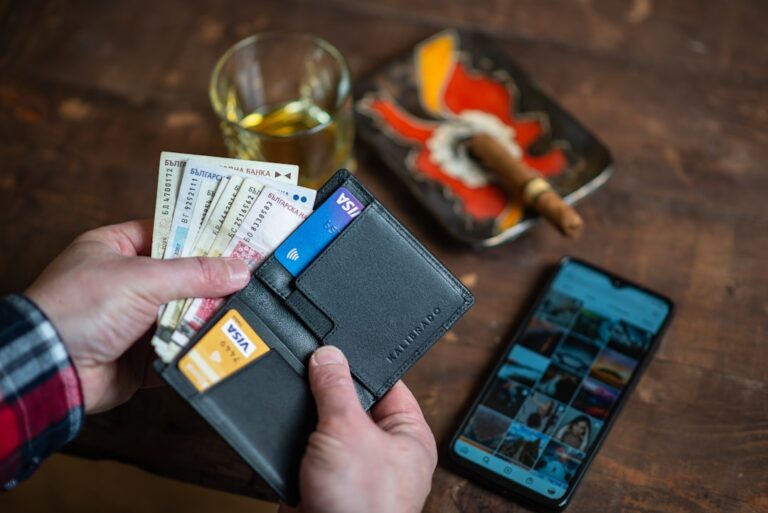
Photo by Emil Kalibradov on Unsplash
By The Money Floor Editorial Team · Source-verified · Last updated July 2026
Both a secured card and a credit-builder loan can raise a damaged or nonexistent credit score, but they work in completely different ways, cost different amounts, and suit different people. If you’ve been wondering which one is worth your money and your time, the answer depends on two things: whether you have any cash to put down upfront, and whether you actually need a card you can spend with. This post walks through both options in plain English, shows you exactly what each one costs, and tells you which one to pick based on your actual situation. The Consumer Financial Protection Bureau confirms that both products are designed specifically to help people with no credit or bad credit build a positive payment history.
Key Takeaways
- A secured card requires a cash deposit upfront (typically $200 to $500) and gives you a card you can use to spend; a credit-builder loan requires no deposit but locks your payments in a savings account you access only after the loan term ends.
- Both products report to the major credit bureaus, and consistent on-time payments build the payment history that drives your score — how much it moves depends on where your score starts and what else is on your report.
- This week, your action step is to check whether your bank or a local credit union offers a credit-builder loan, since credit unions often charge less than online lenders and approve applicants with no credit history.
- The biggest mistake people make with secured cards is carrying a balance month to month, because the average credit card APR is 20.94% as of May 2026 (Federal Reserve), and interest charges will cost you far more than any credit score benefit you gain.
Option A: The Secured Credit Card
A secured credit card works almost exactly like a regular credit card, with one key difference. You put down a cash deposit, usually $200 to $500, and that deposit becomes your credit limit. Spend $80, pay it back, and the card reports that on-time payment to all three credit bureaus. Do that every month and your score goes up.
The card issuer holds your deposit as collateral in case you stop paying. That’s the “secured” part. Most secured cards convert to unsecured cards after 12 to 24 months of good behavior and return your deposit, though you should read the fine print before you apply.
Pros of a Secured Card
- You can use it for everyday spending, which makes it easier to build the habit of paying a bill on time each month
- Many secured cards have no annual fee or a low one ($0 to $35/year) — just avoid any card with fees over $40
- It builds both payment history and credit utilization, which FICO identifies as the two largest components of its scoring model
- Several issuers (Discover, Capital One) let you graduate to a regular card and get your deposit back without opening a new account
Cons of a Secured Card
- You need $200 to $500 liquid cash to put down as a deposit — if that’s money you’d otherwise need for bills, this creates a problem
- If you carry a balance, you’re paying the prevailing credit card APR on your own deposit-backed limit, which is genuinely harmful — the Federal Reserve tracks the average credit card rate in its consumer credit data, and it has run well above 20% in recent years
- Some secured cards come loaded with fees: processing fees, monthly maintenance fees, and activation charges that eat into a $200 limit fast — research is required before applying
- The credit limit is usually low, so you need to keep your spending well under 30% of the limit (under $60 on a $200 card) to get the utilization benefit — see our guide on what credit utilization rate you should actually have for the exact numbers to target
Who a Secured Card Is Best For
A secured card makes the most sense if you have $200 to $300 sitting in savings that you don’t need for emergencies, and if you already spend money on groceries or gas every month. You’re essentially redirecting spending you’d do anyway through a card that reports to the bureaus. It’s also the better pick if you want a product that eventually becomes a real credit card in your wallet, especially if you’re rebuilding credit after bankruptcy. You can read more about building from scratch in our guide to how to build credit when you have none or bad credit.
Option B: The Credit-Builder Loan
A credit-builder loan is almost the reverse of a regular loan. Instead of getting money upfront and paying it back, you make monthly payments and the lender holds your money in a locked savings account. At the end of the term, usually 12 to 24 months, you get that money back. The lender reports your on-time payments to the credit bureaus the whole time.
Think of it as a forced savings plan with a credit score side effect. You don’t receive any money when the loan starts. You’re essentially paying yourself back, through a lender, while building a credit history. The loan amounts are typically small: $300 to $1,000.
Pros of a Credit-Builder Loan
- No cash deposit required upfront, which is critical if you’re truly starting from zero
- You build savings automatically at the same time you build credit — at the end of 12 months of $50/month payments, you walk away with roughly $540 to $580 (minus interest) in your pocket
- You can’t spend the money, so there’s no temptation to carry a balance or rack up debt
- Credit unions often offer these at lower interest rates than online lenders — put your loan amount, rate, and term into any loan calculator to see exactly what the interest will cost you over the year
Cons of a Credit-Builder Loan
- You don’t get usable money or a card you can spend with, which means you’re paying for a credit score improvement and nothing else
- Missing a payment hurts you badly, because the whole point of this product is on-time payments — one miss erases months of progress
- Online credit-builder loan providers (Self, Credit Strong) are generally more expensive than credit unions, typically charging higher APRs plus administrative fees — check the current rates and fee disclosures on each provider’s site before you apply
- It adds an installment loan to your credit mix, which is useful, but it doesn’t build credit utilization history the same way a card does
Who a Credit-Builder Loan Is Best For
A credit-builder loan is the right call if you don’t have $200 to $300 sitting available for a deposit, or if you’ve proven to yourself that having a credit card leads to bad spending habits. It’s also a smart pick if your emergency fund is thin and you can’t afford to lock up cash as a security deposit. The monthly payment amount is small enough that most people can absorb it: $35 to $60 per month for 12 months is a realistic range.
Secured Card vs Credit-Builder Loan: Side by Side
| Factor | Secured Card | Credit-Builder Loan |
|---|---|---|
| Upfront cash needed | $200–$500 deposit | None |
| Monthly cost | $0 if paid in full; 20.94% APR if not | $35–$60/month (you get most back) |
| Do you get money back? | Yes — deposit returned when card upgrades | Yes — savings released at term end |
| Can you spend with it? | Yes | No |
| Credit types built | Payment history + utilization | Payment history + credit mix |
| Risk if you overspend | High (interest + utilization damage) | None (can’t spend it) |
| Best provider type | Discover, Capital One, local banks | Local credit unions (cheapest) |
| Typical score improvement | 40–100 points in 12 months | 40–80 points in 12 months |
| Biggest mistake to avoid | Carrying a monthly balance | Missing a payment |
Which One Should You Choose?
Here’s the honest answer, broken down by situation. Pick the one that fits your life right now, not the one that sounds smarter on paper.
Choose a secured card if:
- You have $200 to $500 in savings you can lock up for 12 to 18 months without it hurting
- You already spend money on groceries, gas, or subscriptions every month and could just route that through a card
- You are confident you’ll pay the full balance every month, not the minimum
- You want to end up with an actual credit card in your wallet when the process is done
If you go the secured card route, pay the full balance every single month. Not the minimum. The full amount. The average credit card APR sits at 20.94% as of May 2026, per the Federal Reserve. Paying 20% interest to build a credit score is a terrible trade. The goal is zero interest charges, ever, on this card.
Choose a credit-builder loan if:
- You don’t have $200 to $300 in available cash for a deposit
- You’ve had a credit card before and it led to debt you regret (the credit-builder loan removes that risk entirely)
- You want to build savings and a credit score at the same time with one product
- You’re starting from absolutely no credit history and want the lowest-risk entry point
A credit-builder loan from a local credit union is often the cheapest way to do this. Credit unions tend to charge lower APRs on these products than online lenders — call or check your local credit union’s website for their current rate, since it varies by institution. On a $500 loan paid over 12 months at $43/month, your total interest cost might be $25. That’s $25 to build 12 months of payment history and walk away with $500 in savings. It’s a genuinely good deal for what you get.
What if you want to do both?
Some people do use a secured card and a credit-builder loan at the same time. Having both builds a credit mix, which FICO lists as a contributing factor in its scoring model, though it carries less weight than payment history or utilization. But don’t overextend yourself. If managing two monthly payments would strain your budget, pick one and do it perfectly. Investopedia’s credit score research consistently shows that payment history (35% of your score) matters far more than credit mix. One product, paid on time every month, beats two products where you sometimes miss payments.
A quick word on “what if I can only do $30 a month?”
That’s enough. A credit-builder loan at $30 to $40 per month is a real product that real credit unions offer. At $35/month over 12 months, you’d pay in $420 and get back roughly $395 to $405 after interest. Your credit score benefit is identical to someone paying $80/month. The payment history is what matters, not the dollar amount. Check out our full post on building credit from no credit or bad credit for more options at every budget level.
And whichever product you choose, pair it with one simple habit: put a recurring calendar reminder for two days before your due date every single month. That one reminder has saved more credit scores than any financial strategy ever written about.
Once your score climbs and you’ve established a baseline, your next move is to understand how credit fits into your larger financial picture. Our 2026 money reset checklist walks through every step, including where credit sits in the order of financial priorities.
Frequently Asked Questions
Which builds credit faster: a secured card or a credit-builder loan?
Both products can raise your score by 40 to 100 points within 12 months of consistent on-time payments. A secured card may show slightly faster results in the first few months because it builds both payment history and credit utilization simultaneously. However, neither option is dramatically faster than the other, and the real variable is whether you pay on time every single month without exception.
Can I do a secured card with bad credit, or do I need a minimum score?
Most secured cards are specifically designed for people with bad or no credit, and many have no minimum credit score requirement. You typically just need to be 18 or older, have a Social Security number, and be able to fund the deposit. Cards from Capital One and Discover are among the most accessible. Always check for hidden fees before applying.
What happens to the money I put down as a secured card deposit?
Your deposit is held by the card issuer in a separate account as collateral. It’s fully refundable when you close the account in good standing or when the card issuer upgrades you to an unsecured card, which typically happens after 12 to 24 months of responsible use. Your deposit does not earn meaningful interest while it’s held.
Is Self (the credit-builder loan app) worth it?
Self is a legitimate credit-builder loan product, but it’s more expensive than going through a local credit union. Self charges an administrative fee plus interest — check Self’s current fee disclosure on their website before you sign up, since the total cost depends on the plan you choose. A credit union offering the same product will typically cost less — ask your local credit union for their current rate and total cost before comparing. Check your local credit union first. If you have no access to a credit union, Self is a reasonable fallback.
How much will my credit score go up with a secured card in 6 months?
Results vary significantly based on your starting score and full credit profile, but many people with no credit history see a score appear within a few months of opening a secured card, though where it starts depends on your full credit picture — nobody can quote you a number without seeing your report. People with damaged credit (existing negative marks) typically see slower improvement. Keeping your balance under 10% of your credit limit every month accelerates the process.
Should I get a secured card or a credit-builder loan if I’m trying to buy a house in 2 to 3 years?
If buying a home in 2 to 3 years is the goal, a secured card is probably the better choice. Mortgage lenders look closely at credit utilization and revolving credit history, and a secured card builds exactly those factors. Conventional loan score requirements vary by lender and loan program — check with your lender directly and review current FHA and conventional guidelines at the CFPB’s homebuying resources before you set a target score. The 30-year fixed mortgage rate is 6.49% as of July 2026, per Freddie Mac, and a higher credit score can meaningfully lower what you’re offered.
Get Real Money Advice.
No get-rich-quick. No fluff. Just honest help with money — straight to your inbox.
Drop your email below. Weekly. No spam. Unsubscribe anytime. ↓