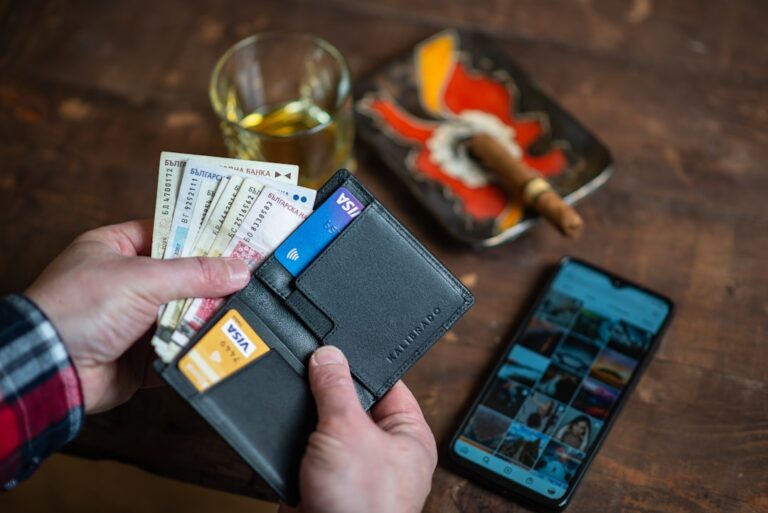

Balance Transfer vs Personal Loan: Which Is Right for You
Photo by Vitaly Gariev on Unsplash
By The Money Floor Editorial Team · Source-verified · Last updated July 2026
When comparing a balance transfer vs personal loan, the right answer depends almost entirely on your credit score, how much you owe, and how fast you can realistically pay it back. Both options exist to solve the same problem: you’re stuck paying an average credit card APR of 20.94% (as of May 2026, per the Federal Reserve), and you want out. But they work very differently, and choosing the wrong one could cost you hundreds of dollars or leave you in worse shape than when you started.
Key Takeaways
- A balance transfer can get you 0% interest for 12 to 21 months, but approval depends on your credit profile — lenders set their own thresholds — and you must pay off the balance before the promotional period ends.
- A personal loan offers a fixed interest rate and a fixed payoff timeline, making it more predictable than a balance transfer for larger debts — the rate you get depends on your credit profile, income, and the lender.
- If your credit card debt is manageable and you can pay it off within the promotional window, a balance transfer is often the cheaper move — divide your balance by the promo months to see whether the payment is realistic for your budget.
- Never do a balance transfer if you might carry a balance past the promo period. The rate that kicks in afterward is usually just as high as what you’re escaping.
This post gives you a straight answer. No jargon, no “it depends” without follow-through. By the end, you’ll know exactly which option fits your situation and what to do this week.
Option A: The Balance Transfer Card
A balance transfer card lets you move existing credit card debt onto a new card with a 0% promotional APR for a set period, usually 12 to 21 months. During that window, every dollar you pay goes straight toward the principal. No interest eating your progress.
Here’s the basic math. Say you have $5,000 in credit card debt at 20.94% APR. Paying $200/month at that rate means you’ll pay roughly $1,600 in interest over the payoff period and take about 32 months to clear it. Move that same $5,000 to a 0% balance transfer card with an 18-month promo window and pay about $278/month. You’re done in 18 months, and you paid $0 in interest (plus the transfer fee, which we’ll get to).
That’s a real savings of over $1,500. It’s not magic. It’s just math working in your favor instead of against you.
The Balance Transfer Fee
Most balance transfer cards charge a fee of 3% to 5% of the amount transferred. On $5,000, that’s $150 to $250 upfront. Still a massive win compared to months of 20%+ interest, but it’s not truly free. Factor that fee into your math before you apply.
Pros of a Balance Transfer
- 0% interest during the promo period means every payment makes a real dent
- Best option for clearing a manageable balance quickly
- Some cards offer 0% on purchases too, though mixing transfer debt with new spending is a trap
- No collateral required
Cons of a Balance Transfer
- Approval and offer quality depend on your credit profile — each card issuer sets its own standards, so checking pre-approval with no hard pull is the safest first step
- The promo rate eventually expires. If you still have a balance when it does, the new rate is usually 20% or more
- Transfer fees of 3% to 5% add to your balance upfront
- Opening a new card creates a hard inquiry and can temporarily dip your credit score
- Many cards cap the transfer amount, often at $10,000 or less
Who a Balance Transfer Is Best For
A balance transfer works best if you have good credit (680+), your debt is under $10,000, and you’re confident you can pay it off within the promo window. It’s also the right move if you’re disciplined enough not to run up the old card again after you transfer. That part trips people up constantly. If you clear $5,000 off your Visa and then charge $3,000 back onto it, you haven’t fixed anything.
Option B: The Personal Loan
A personal loan is a fixed-rate installment loan you take out through a bank, credit union, or online lender. You borrow a lump sum, use it to pay off your credit cards, and then repay the loan in equal monthly payments over a set term, usually 2 to 5 years.
Personal loan rates vary significantly by lender and credit profile. The stronger your credit, income, and debt-to-income ratio, the lower the rate you’ll be offered — and with a weaker profile, the rate may not save you much over what you’re already paying on your cards. Prequalify with several lenders to see real numbers for your situation before committing.
Personal loans are predictable. You know your rate on day one. You know your payment. You know your payoff date. That structure helps a lot of people who struggled with the open-ended nature of credit card debt.
A Real Example
Take that same $5,000 at a 12% personal loan rate over 36 months. Your monthly payment is $166. Total interest paid: about $980. Compare that to paying $200/month on a 20.94% credit card, which costs roughly $1,600 in interest and takes longer. The personal loan wins there. But it doesn’t beat a balance transfer where you actually pay off the debt within the promo window. Context matters.
Pros of a Personal Loan
- Fixed interest rate means no surprises, even if market rates change
- Fixed monthly payment makes budgeting simple
- Can handle larger balances that exceed balance transfer card limits
- No promo period to race against
- Can consolidate multiple debts into one payment
Cons of a Personal Loan
- Even a “good” personal loan rate of 10-12% still costs you real money in interest
- Origination fees of 1% to 8% on some loans eat into the savings
- Requires a credit check. Lower scores get worse rates or denials
- If you keep using credit cards after taking out the loan, you now have two debt problems
- Longer repayment terms mean more total interest paid, even at a lower rate
Who a Personal Loan Is Best For
A personal loan makes sense when your debt is too large for a balance transfer card, your credit score is too low to qualify for 0% transfer offers, or you simply need the structure of a fixed payment and a guaranteed end date — and if you’re still weighing both paths, our overdraft protection vs line of credit comparison shows how other short-term borrowing tools stack up. It’s also the right call if your debt spans multiple types beyond credit cards, since personal loans can consolidate almost anything. Check out our complete debt payoff playbook if you’re deciding between multiple repayment strategies at once.
Balance Transfer vs Personal Loan: Side-by-Side
| Factor | Balance Transfer Card | Personal Loan |
|---|---|---|
| Interest rate | 0% promo (12-21 months), then 20%+ | Fixed 8%-22% for full term |
| Upfront cost | 3%-5% transfer fee | 1%-8% origination fee (varies) |
| Credit score needed | 680+ for best offers | 600+ (rate depends on score) |
| Best debt amount | Under $10,000 | $5,000-$40,000+ |
| Payment structure | Flexible minimum (dangerous) | Fixed monthly payment |
| Timeline pressure | High. Must beat the promo clock | Low. Rate is locked from day one |
| Impact on credit | New card, hard inquiry, utilization shift | Hard inquiry, adds installment account |
| Biggest risk | Balance still there when promo ends | Continuing to use credit cards after |
| Best for | Disciplined payoff in 18 months or less | Larger debt, structure needed, lower scores |
Which One Should YOU Choose
Here’s the straight answer based on your specific situation. Pick the description that fits you closest.
Do a balance transfer if:
- Your credit score is 680 or higher
- Your total credit card debt is under $10,000
- You can afford to divide the balance by the promo months and actually make that payment (example: $6,000 debt, 18-month promo = $333/month minimum to clear it)
- You’re committed to not putting new charges on the old card
The 0% promo period is one of the best tools available for wiping out manageable credit card debt. Used correctly, it’s close to a free loan. If this is your path, also read our breakdown of credit card debt payoff timelines so you know exactly how to pace your payments.
Get a personal loan if:
- Your debt is over $10,000 and exceeds typical transfer limits
- Your credit score is between 600 and 680. You won’t qualify for the best transfer offers, but you may still get a personal loan rate better than 20.94%
- You’ve done balance transfers before and ended up with the debt still sitting there when the promo ended
- You need the psychological and practical structure of a fixed payment and a guaranteed end date
- You want to consolidate multiple types of debt into one place
A personal loan won’t beat 0% interest, but it will beat 20.94% as long as you qualify for a rate below that. And the fixed structure means you’ll actually pay it off, which is worth something real. For a related decision, see our comparison of a 401k loan vs personal loan if you’re also weighing whether to tap retirement savings.
What if your credit score is below 600?
Neither option will work well for you right now. Balance transfer cards will decline you, and personal loan rates at that score level may be just as high as your current card. Focus first on getting your score up before applying for either. The Consumer Financial Protection Bureau has free resources on disputing errors and building credit. You can also check our guide on how to build credit when you’re starting from scratch or recovering.
What if you can only afford small payments?
This matters more than people realize. A balance transfer is only cheaper if you actually clear the balance before the promo period expires. If you can only pay $100/month toward $5,000 in debt, a 18-month promo window won’t save you. You’ll still have $3,200 sitting there when the rate resets to 20%+. In that case, a personal loan with a 36-month or 48-month term is the more honest choice. It costs more in interest, but it matches reality.
One rule that applies to both
Whichever path you choose, stop adding to the cards you just paid off. This sounds obvious. It almost never is in practice. Debt consolidation only works if the behavior that created the debt changes. A balance transfer or personal loan is not a solution on its own. It’s a tool. You have to use it right.
If spending habits are the actual issue, start with a debt payoff method that matches your psychology before deciding on a vehicle. The best consolidation plan is the one you can stick to.
Frequently Asked Questions
Is a balance transfer better than a personal loan for paying off credit card debt?
A balance transfer is usually better if you have good credit (680+), your debt is under $10,000, and you can pay it off within the promotional 0% period, which typically runs 12 to 21 months. If you can’t pay it off that fast, or if your debt is larger, a personal loan with a fixed rate is often the safer choice because there’s no rate-reset risk.
What credit score do you need for a balance transfer card?
Balance transfer cards with 0% promotional offers are generally aimed at people with good-to-excellent credit, and each issuer sets its own approval standards — none of which are publicly fixed. The best offers, including the longest promo periods and lowest transfer fees, go to the strongest applicants. If your credit is thin or damaged, you may get a shorter window or be declined, and most issuers let you check for pre-approval without a hard pull so you can gauge your odds first.
What happens if you don’t pay off a balance transfer before the promo period ends?
When the promotional 0% period ends, the remaining balance is subject to the card’s regular APR, which is disclosed in the card’s terms before you apply — read that figure carefully, because it tells you exactly what you’re racing against. You don’t lose the interest you saved during the promo period, but any remaining balance will start accruing interest at the full rate immediately. This is the single biggest risk of a balance transfer.
Can you do a balance transfer if you already have a lot of debt?
You can try, but high existing debt often hurts your approval odds and credit limit. Most balance transfer cards will only let you transfer up to your approved credit limit, which may be less than your total debt. If you owe $15,000 or more, a personal loan or debt consolidation loan may be a more realistic option to cover the full amount in one move.
Do balance transfers hurt your credit score?
Opening a new credit card for a balance transfer creates a hard inquiry, which can temporarily dip your score — the size of the dip depends on the rest of your credit profile. Over time, though, the lower credit utilization from paying down the transferred balance can improve your score significantly. The net effect is usually positive if you use the card responsibly and don’t max out your old cards again.
How do I find a personal loan rate below 20%?
Start with credit unions, which often offer lower rates than banks for personal loans. Online lenders like Marcus (by Goldman Sachs), LightStream, and SoFi are also competitive in 2026 for borrowers with scores above 670. Always prequalify with multiple lenders using a soft credit pull before submitting a full application, so you can compare rates without hurting your score.
Get Real Money Advice.
No get-rich-quick. No fluff. Just honest help with money — straight to your inbox.
Drop your email below. Weekly. No spam. Unsubscribe anytime. ↓