
Budgeting Apps Won’t Save You. Here’s What Will.
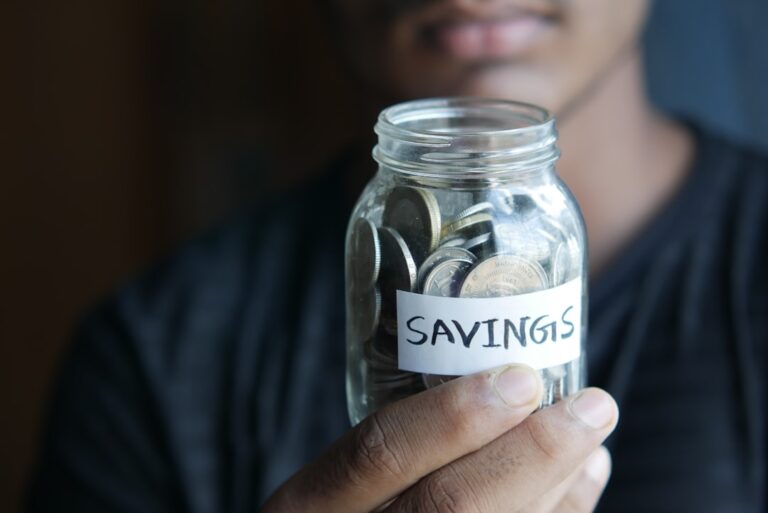
Photo by Vitaly Gariev on Unsplash
By The Money Floor Editorial Team · Source-verified · Last updated July 2026
Budgeting apps don’t work — not because they’re poorly built, but because they’re solving the wrong problem. I had this conversation again last week with someone who’d been using a popular budgeting app for eight months. She knew exactly where every dollar was going. She could show me pie charts. She had categories and sub-categories. And she still had $340 in savings and $9,200 in credit card debt. The app was doing its job. But her finances weren’t moving. That’s not a coincidence. It’s a pattern I see constantly, and I want to explain why it happens — and what actually gets people out of it.
Key Takeaways
- Budgeting apps create awareness, but awareness alone doesn’t change spending behavior or build savings — action does.
- The U.S. personal saving rate was just 3.0% as of May 2026, according to the Bureau of Economic Analysis — meaning most people are spending 97 cents of every dollar regardless of what app they use.
- The single most effective financial move you can make this week is automating a transfer to savings or debt payment the same day your paycheck lands.
- The biggest mistake people make with budgeting apps is using them to track spending instead of using them to pre-commit to a plan — and that distinction changes everything.
Why Budgeting Apps Give You a False Sense of Progress
Here’s the uncomfortable truth: knowing you spent $340 on restaurants last month doesn’t stop you from spending $340 on restaurants this month. The app tells you what happened. It doesn’t change what happens next. And most people, myself included at one point, mistake the act of tracking for the act of actually doing something.
This is called the “monitoring effect” — the idea that just watching a behavior changes it. And it does work, briefly. For the first few weeks of using an app, you’re more conscious. But that wears off. The categories stop shocking you. The notifications become noise. By month three, you’re still logging transactions, but nothing has structurally changed about how money moves through your life.
The U.S. personal saving rate sat at just 3.0% as of May 2026, per the Federal Reserve’s data via the Bureau of Economic Analysis. That number hasn’t meaningfully improved in years, despite budgeting apps becoming dramatically more popular, more sophisticated, and more widely used. If tracking spending fixed spending, the saving rate would be climbing. It isn’t.
Awareness is not a plan. A color-coded spending breakdown is not a plan. A plan is a structure that moves money automatically, before you can spend it, every single time. Apps don’t build that structure. You have to build it yourself.
The Specific Thing Budgeting Apps Can’t Do
Budgeting apps live in the past. They categorize what already happened. But the financial decisions that actually matter happen in a specific three-minute window: the moment after your paycheck hits. What you do with money in that window determines almost everything else. And no app controls that window. You do.
The concept is sometimes called “paying yourself first,” but that phrase has become so overused that it’s lost its meaning. Let me make it concrete. If your paycheck is $3,200 and you want to save $200 and put $300 toward debt, those transfers need to leave your checking account on payday — automatically, before you see the balance. Not at the end of the month with whatever’s left. Not after rent, groceries, and a couple of dinners out. On payday. First.
That one structural change — the automatic pre-commitment — does more for your finances than eight months of logging your Starbucks purchases into a color-coded app. I’ve written before about automating your finances before willpower runs out, and I’ll say it again here: willpower is not a system. You cannot spend 20 years making the right call every single day. Automation makes the right call for you, every time, without asking your permission.
The “But It Helps Me See Where My Money Goes” Counterargument
I hear this one a lot. And I want to be fair — yes, if you genuinely have no idea where your money is going, one month of tracking can be useful. It can surface real surprises. Maybe you’re spending $180 a month on subscriptions you forgot about. Finding that and canceling it is real money. I’m not saying apps are worthless.
But that exercise takes about four weeks, not eight months. After month one, you know where your money goes. The question is: then what? Most people keep tracking. They keep being aware. And they don’t change the structure of their finances at all.
The other thing apps absolutely cannot do is fix an income problem. If you’re spending $3,800 a month and bringing home $3,400, no amount of categorization helps. You either need more income or lower fixed costs — probably some of both. An app will show you the gap in painful detail. It won’t close it. That requires either a hard decision about a fixed expense (car ownership costs alone can be staggering, rent, subscriptions) or a real move toward more income.
If you’re living paycheck to paycheck, the app isn’t the bottleneck. The gap between income and fixed obligations is the bottleneck. Tracking it more precisely doesn’t help.
What Actually Works (And Why It’s Boring)
The things that genuinely fix finances are not interesting. They don’t have clean interfaces or notification badges. They’re not satisfying to show someone on your phone. But they work, consistently, for almost everyone who does them.
Automation That Moves Money Before You Touch It
Set up an automatic transfer to a high-yield savings account the same day your paycheck lands — not two days later, not at the end of the month. The same day. Start with whatever doesn’t break you. If that’s $50, it’s $50. In 12 months, that’s $600 you wouldn’t have had. Then raise it.
Do the same with debt payments. Set minimum payments to auto-pay so you never miss one and wreck your credit. Then set a separate automatic extra payment on your highest-rate debt. Credit card APR varies widely by card and borrower, and the Federal Reserve publishes average rate data in its G.19 consumer credit release — worth checking before you assume your rate is typical. Put your own balance and rate into a loan calculator to see exactly what carrying that balance costs you each year; the number is whatever the math says, and it is usually alarming enough on its own. No budgeting app pays that interest. Only a higher payment does.
Three Numbers Instead of Forty Categories
Forget the 40-category budget. You need three numbers: fixed expenses (rent, car, insurance, subscriptions), savings and debt payments (treated as non-negotiable), and everything else. The “everything else” number is what you actually have to spend on food, fun, gas, and the random stuff of life. Knowing that number — and only spending that number — is a budget. Everything else is a spreadsheet hobby.
This is essentially a simplified version of zero-based budgeting, stripped down to what actually matters. Most people don’t need more categories. They need fewer, with harder limits on what’s left after the important stuff moves automatically.
One Hard Look at Fixed Costs Every Six Months
Your fixed costs are where the real money is. Rent, car payment, insurance, subscriptions — these run on autopilot, which means they quietly eat your paycheck every month without triggering any emotional spending response. A $180/month gym membership you use twice a week feels fine. But over a year, that’s $2,160. Cancel it and redirect $180 a month toward your highest-interest debt — plug your own balance, rate, and new monthly payment into a debt payoff calculator and you will see exactly how many months you cut off.
Apps can surface these. That’s legitimate value. But the action — calling to cancel, negotiating a lower rate, switching providers — is always something you have to do yourself.
A Specific Goal With a Deadline
Vague intentions don’t work. “I want to save more” doesn’t work. “I want to have $1,500 in an emergency fund by November 1, 2026, which means I need to transfer $214 every two weeks starting today” works. Specificity is the difference between a wish and a plan. The app can help you set the goal. But you have to be the one who commits to the number and sets up the transfer.
If you’re not sure what to aim for first, the answer for most people is a $1,000 starter emergency fund, then minimum three months of expenses. I’ve laid out the exact steps in our guide on how to build an emergency fund. Start there.
What to Do This Week (Not Someday)
Here’s the one specific thing I want you to do before you close this tab.
Log into your bank account. Find the automatic transfer or scheduled payment feature. Set up one automatic transfer to a savings account for whatever amount won’t break you — $25, $50, $100 — timed to hit on your next payday. Not at the end of the month. On payday.
That’s it. One transfer. You’re done for today.
You can keep using your budgeting app if you want. I’m not telling you to delete it. But stop expecting it to do the thing only structure can do. Stop treating awareness as action. The app shows you the problem. The automatic transfer starts solving it.
The math is simple and brutal: the U.S. Bureau of Labor Statistics data consistently shows that Americans with automated savings accumulate meaningfully more than those who rely on end-of-month leftovers — not because they earn more, but because the money moves before the spending decision happens. That’s not a trick. That’s just how it works.
You don’t need a better app. You need a better system. And the system starts with one automatic transfer, set up today.
Frequently Asked Questions
Do budgeting apps actually help you save money?
Budgeting apps can help you identify where your money is going, which is useful for about the first month. After that, most people stop changing their behavior even as they continue tracking. Apps create awareness — they don’t move money, eliminate debt, or build savings automatically. The research and real-world saving rate data suggest that automation and structural changes to how money flows are far more effective than tracking alone.
What is the best budgeting method if apps don’t work?
The most effective approach for most people is to automate savings and debt payments on payday, then budget only what’s left. Reduce your budget to three categories: fixed expenses, automated savings and debt payments, and discretionary spending. This “pay yourself first” structure removes willpower from the equation entirely and builds savings even when motivation is low.
How much should I automatically transfer to savings each month?
Start with whatever amount won’t cause you to overdraft or skip a bill. Even $50 per paycheck, transferred automatically, adds up steadily — multiply your transfer amount by the number of pay periods in a year and the total is yours, not an estimate. Once that feels normal, increase it. The goal isn’t a specific dollar amount at first — it’s building the habit of money moving before you touch it. Over time, work toward saving a meaningful share of your take-home pay — what that percentage looks like depends on your fixed obligations and income, and a certified financial planner can help you set a realistic target for your situation.
Is it worth paying for a budgeting app like YNAB?
YNAB costs roughly $99 per year and works on a zero-based budgeting system that does require you to pre-allocate money — which is more action-oriented than pure tracking apps. If that structure genuinely changes how you behave with money, it’s worth it. But if you’ve been using any budgeting app for more than two months and your savings balance hasn’t moved, the app isn’t the solution. A free alternative is a simple spreadsheet combined with automated bank transfers.
Why do I know my budget but still overspend?
Knowing your budget and having a system that enforces it are two completely different things. Overspending after tracking is one of the clearest signs that awareness alone doesn’t work for you — and it doesn’t work for most people. The fix is structural: automate the money you’re supposed to save or pay toward debt before you can spend it. What’s left in checking is what you have. Spend that however you want.
What should I do first if I feel behind financially?
Set up one automatic transfer to a savings account for your next payday — even $50. Then calculate your three numbers: total fixed monthly expenses, total automated savings and debt payments, and what’s left to spend. That’s your real budget. From there, focus on building a $1,000 emergency fund before anything else. Once that’s in place, turn your attention to your highest-interest debt.
Get Real Money Advice.
No get-rich-quick. No fluff. Just honest help with money — straight to your inbox.
Drop your email below. Weekly. No spam. Unsubscribe anytime. ↓