
What Credit Utilization Rate Should I Actually Have?
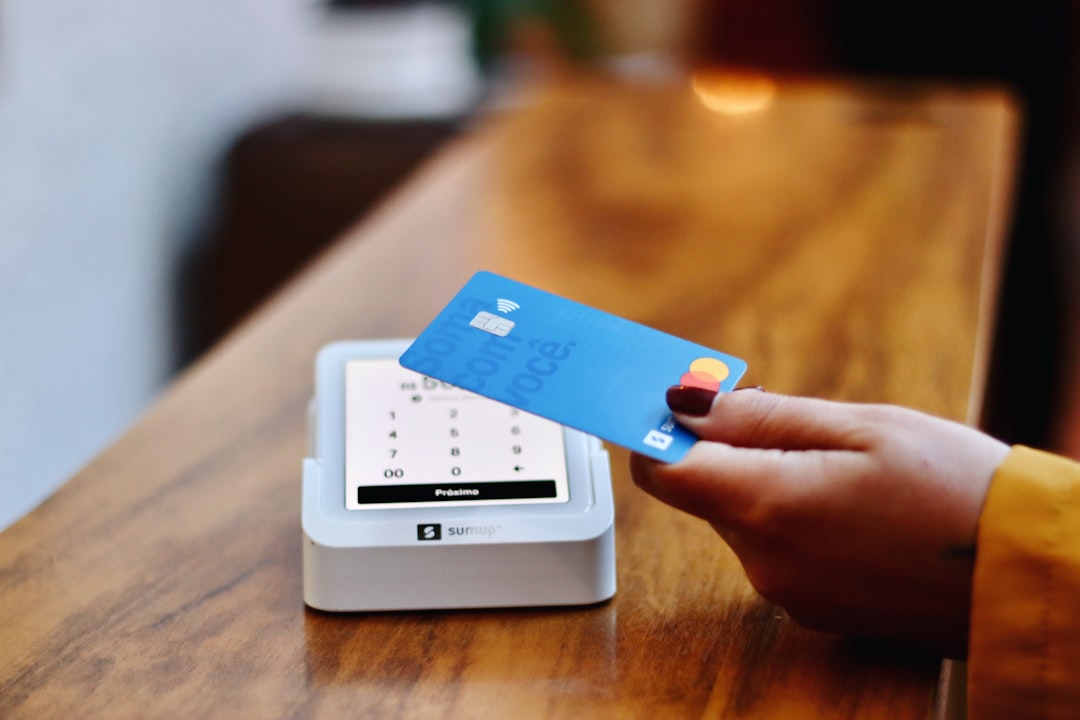
Photo by Nathana Rebouças on Unsplash
By The Money Floor Editorial Team · Source-verified · Last updated July 2026
Your credit utilization rate is the percentage of your available credit that you’re currently using, and it’s one of the two biggest factors in your credit score. Most people know it matters. Almost nobody knows the actual number to target, what to do if you’re way over it, or why the “under 30%” rule you’ve heard is only half the answer. This post gives you the full picture: what the target is, how fast it moves your score, and what to do today if your utilization is wrecking you.
Key Takeaways
- Your credit utilization rate should be under 10% for the best possible credit score impact, not just under 30% as most advice says.
- According to FICO’s published scoring breakdown, credit utilization makes up roughly 30% of your FICO score, making it the second most important factor after payment history.
- Paying down a balance or requesting a credit limit increase can lower your utilization and improve your score within one billing cycle — how quickly depends on when your issuer reports to the bureaus and how fast your score recalculates after that.
- Closing old credit cards raises your utilization rate immediately, which is a common mistake that quietly damages your score.
What Is a Credit Utilization Rate, Exactly?
The short answer: It’s the percentage of your total available credit that you’re currently carrying as a balance.
Here’s the math. Say you have two credit cards. One has a $5,000 limit with a $1,500 balance. The other has a $3,000 limit with a $600 balance. Your total available credit is $8,000. Your total balance is $2,100. Divide $2,100 by $8,000 and you get 0.2625, or 26.25%.
That’s your utilization rate. And yes, every card also has its own individual utilization that scoring models track separately. So even if your overall rate looks fine, one maxed-out card can still hurt you.
According to the Consumer Financial Protection Bureau, credit utilization is one of the most impactful variables in your credit profile. It’s not just a technicality. It’s a real lever.
What Credit Utilization Percentage Should I Actually Target?
The short answer: Under 10%. Not under 30%. Under 10%.
You’ve probably heard “keep it under 30%.” That’s true in the sense that 30% is the point where your score starts taking clear damage. But 30% is the ceiling, not the goal. People with the strongest scores tend to carry very low utilization — single digits or less — though the score reflects everything in the file, not utilization alone.
Think of it this way. Under 30% keeps you out of trouble. Under 10% actively builds your score. Those are different things.
If you have $8,000 in total available credit, here’s what those thresholds actually mean in dollars:
- Under 30%: Keep your total balance below $2,400
- Under 10%: Keep your total balance below $800
- Under 1% (the sweet spot some experts cite): Keep your total balance below $80
The 1% rule is real but not always practical. If you carry any balance at all, aiming for under 10% is the move. Zero utilization is also fine, but a tiny reported balance can slightly outperform true zero with some scoring models.
How Much Does Utilization Actually Affect My Score?
The short answer: A lot. It’s 30% of your FICO score and it responds fast.
Your FICO score breaks down like this, according to FICO’s published scoring model:
- Payment history: 35%
- Credit utilization: 30%
- Length of credit history: 15%
- Credit mix: 10%
- New credit inquiries: 10%
Payment history is number one. But utilization is the fastest-moving factor on this list. Pay down a balance today, and within one billing cycle (usually 30 to 45 days), your score reflects that change. That’s not true for most other credit factors.
Going from 60% utilization to 15% can move your score meaningfully — how much depends on everything else in your file, and nobody can give you a number without seeing your full report. The same is true of the jump from 30% down to 10%: the direction is reliably positive, but the size of the gain is yours to discover. If you’re trying to build your credit score quickly, utilization is the first place to look.
What If My Utilization Is Really High Right Now?
The short answer: You have options, and some of them work within one billing cycle.
High utilization usually means one of two things: you’re carrying real debt you can’t immediately pay off, or you’re charging a lot to your cards and paying it in full but the balance gets reported before your payment clears. These problems have different fixes.
If You’re Carrying Actual Debt
The goal is to reduce the balance. That’s obvious, but here’s what isn’t: even partial paydowns help a lot. Getting from 80% to 40% matters, even if you can’t get to 10% right away. Every percent you drop moves your score in the right direction.
If you have multiple cards, pay down the one with the highest individual utilization first. Your per-card rate matters alongside your overall rate.
If the debt is significant, it’s worth reading our post on credit card debt payoff timelines to set a realistic plan. At an average APR of 20.94% as of May 2026 (per the Federal Reserve), carrying a balance is expensive. Utilization and interest are a two-front problem.
If You’re Paying in Full but Still Showing High Utilization
This is more common than people realize. Your card reports your balance to the credit bureaus on your statement closing date, not your payment due date. So even if you pay every dollar off each month, you might still show 40% utilization because the snapshot gets taken before your payment posts.
Fix: Pay your balance down before your statement closing date each month. Your statement date is listed in your online account. Paying a week early can drop your reported utilization to near zero, even if you charge $3,000 a month.
Request a Credit Limit Increase
If you have decent payment history and haven’t requested an increase recently, call your card issuer and ask. A higher limit with the same balance means lower utilization instantly. Going from a $3,000 limit to a $6,000 limit on one card cuts that card’s utilization in half without paying a dollar.
Some issuers do a hard pull for limit increases; others don’t. Ask before they run it. One hard inquiry is a minor short-term dip, but a significantly lower utilization rate is worth it.
Does Closing Old Cards Hurt My Utilization?
The short answer: Yes, immediately and sometimes significantly.
This is one of the most common mistakes people make. You pay off an old card and close it to feel done with it. What actually happens: your total available credit drops, but your remaining balances stay the same. Your utilization rate goes up overnight.
Say you have $10,000 in total credit and $2,000 in balances. That’s 20% utilization. You close a card with a $4,000 limit and no balance. Now you have $6,000 in available credit and still $2,000 in balances. That’s 33%. You just crossed the danger threshold by closing a card you didn’t owe anything on.
The better move: keep old cards open, even if you rarely use them. A small purchase every few months keeps the card active so the issuer doesn’t close it on you. If the card has an annual fee you don’t want to pay, call and ask for a product change to a no-fee version before canceling.
What About Utilization When I’m Applying for a Mortgage or Car Loan?
The short answer: Get it under 10% before you apply. Timing matters here.
Lenders pull your credit score as part of any major loan application. A 30-year fixed mortgage currently sits at 6.58% as of July 23, 2026, per Freddie Mac. The difference between a 680 and a 740 credit score on that loan can be meaningful in both rate and total interest paid over 30 years.
Because utilization moves fast, you can actually engineer a better score before a major application. Spend 60 to 90 days paying down balances and making sure your reported utilization is under 10% before you apply. That’s a legitimate, legal strategy. It works.
Don’t open new cards or take on new debt during this window, and if you’re worried about fraud exposure, learn whether freezing your credit makes sense. New inquiries and new accounts can temporarily lower your score right when you need it highest.
What to Do This Week: Your Quick Start
Don’t try to do everything at once. Here’s the order that actually makes sense:
- Check your current utilization today. Log into Credit Karma, your card’s app, or pull a free report at AnnualCreditReport.com. You need the actual number, not a guess.
- Find your statement closing dates. Check your online account for each card. This is when your balance gets reported.
- Pay down your highest-utilization card first. Even $200 toward a maxed-out $1,000 card matters more than $200 spread across cards.
- If you’re over 30%, request a limit increase on your longest-held card. Do this before making extra payments if your score is already decent. The higher limit lowers utilization without spending anything.
- Keep closed cards open. If you’ve been thinking about closing a paid-off card, don’t. Leave it open and put a small recurring charge on it.
If you’re rebuilding from a really low score, pair this with the right foundational tools. Our comparison of a secured card vs credit-builder loan can help you figure out what makes sense for your starting point.
Bottom line: The “under 30%” rule you’ve been hearing is the minimum, not the goal. Under 10% is where your score actually climbs. The good news is that utilization moves faster than almost any other credit factor. Pay down a balance or get a limit increase this month, and you’ll see a real number change within one billing cycle. That’s rare in personal finance. Take advantage of it.
Frequently Asked Questions
What is a good credit utilization rate?
Under 10% is the target for the best credit score impact. Under 30% is the minimum threshold to avoid score damage. People with the strongest scores tend to carry very low utilization — single digits or less — though the score reflects everything in the file, not utilization alone. Aim for under 10% on each individual card as well as your overall rate.
Does 0% utilization hurt your credit score?
Zero utilization generally doesn’t hurt your score, but some scoring models give a slight edge to someone carrying a very small balance (under 1% to 5%) versus showing no activity at all. In practice, the difference is minor. Don’t charge things you don’t need just to show activity. Paying in full and showing a near-zero balance is ideal.
How fast does credit utilization affect my score?
Utilization is one of the fastest-moving factors in your credit score. When your card issuer reports your updated balance to the credit bureaus (typically on your statement closing date), your score recalculates within a few days. You can see score changes within one billing cycle of paying down a balance, once your issuer reports the updated balance to the bureaus and your score recalculates.
Does requesting a credit limit increase hurt my score?
It depends on the issuer. Some do a soft pull (no impact on your score) and some do a hard pull (a small, temporary dip that typically fades within a few months). Ask the issuer before they run it. Even if it’s a hard pull, the long-term benefit of lower utilization usually outweighs the short-term hit.
Should I pay off my credit card before the due date or the statement closing date?
Pay before your statement closing date if you want to lower your reported utilization. Your balance is reported to the bureaus on the statement closing date, not the payment due date. Paying a few days before your statement closes means a near-zero balance gets reported, even if you charge a lot each month.
Can high credit utilization on one card hurt me even if my overall rate is low?
Yes. Scoring models look at both your overall utilization and your per-card utilization. If one card is at 80% but your overall rate is 15%, that individual card still creates a negative signal. Aim to keep each card under 10%, not just your combined total.
Get Real Money Advice.
No get-rich-quick. No fluff. Just honest help with money — straight to your inbox.
Drop your email below. Weekly. No spam. Unsubscribe anytime. ↓