
Renting Forever? How to Build a Retirement Plan as a Renter
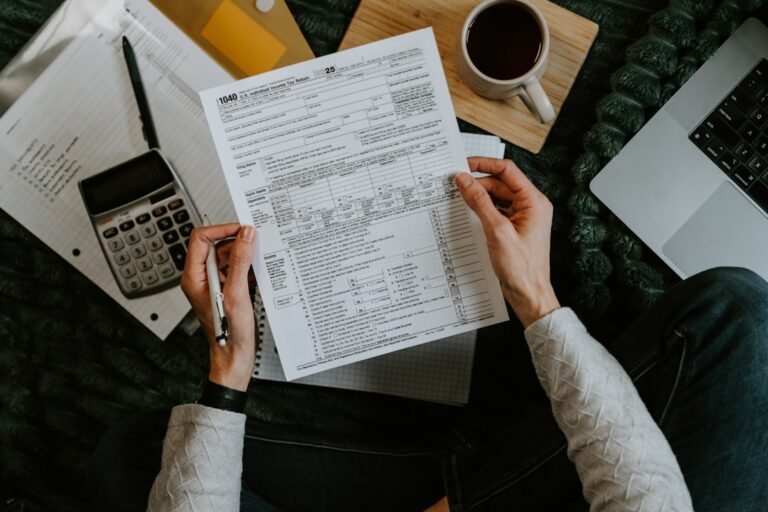
Photo by Huy Nguyen on Unsplash
By The Money Floor Editorial Team · Source-verified · Last updated September 2026
A solid retirement plan for permanent renters is absolutely possible — and it doesn’t require owning a home. You’ve probably heard a version of this a hundred times: “buying is building equity, renting is throwing money away.” That’s a half-truth at best, and it pressures a lot of people into homeownership before they’re ready, or into feeling like failures for not buying. If you’re 35, 42, or 48 and you rent, and you’re starting to think seriously about what retirement actually looks like without a paid-off house, this guide is for you.
Key Takeaways
- Permanent renters can build a strong retirement without home equity by maxing tax-advantaged accounts like a Roth IRA (2026 limit: $7,000) and contributing to a 401k or IRA consistently.
- If you assume a 7% average annual return and invest $400 per month starting at 38 in a diversified index fund portfolio, you could accumulate roughly $380,000 by age 65 — that’s a hypothetical illustration, not a guaranteed outcome.
- This week, open a Roth IRA at Fidelity or Vanguard, set up a $50 automatic monthly contribution, and increase it whenever your income goes up — automation is the only thing that actually sticks.
- The biggest mistake permanent renters make is not accounting for housing costs in retirement — you need to build a larger investment portfolio to cover rent since you won’t have a paid-off mortgage.
Why Renting Doesn’t Automatically Derail Your Retirement
The financial case for renting vs. buying is more complicated than most people admit. With 30-year fixed mortgage rates sitting at 6.76% as of September 2026 (Freddie Mac via FRED), buying right now is expensive — and homeownership statistics show just how out of reach it has become for most people. Plenty of renters are paying less than that for comparable housing.
The honest truth: homeownership builds wealth for a lot of people, but it’s not the only path. The people who retire comfortably as renters aren’t lucky. They’re deliberate. They treat the money they’re not spending on a mortgage, property taxes, HOA fees, and repairs as investment fuel — and they actually invest it.
If you’re a permanent renter and you’ve been doing that, great. If you haven’t been, that’s okay. But you need to start now, because the one thing renting doesn’t give you is a built-in savings mechanism. A mortgage forces equity. Renting doesn’t force anything. That’s both the freedom and the risk.
The Real Retirement Challenge Renters Face
With inflation running at 3.5% year-over-year as of July 2026 (BLS via FRED), rent growth is a real ongoing pressure. That means your retirement portfolio has to do more work than a homeowner’s. You need a larger nest egg to cover what they’ve already paid off.
This isn’t a reason to panic. It’s a reason to be specific about your numbers — and to start building that portfolio intentionally.
How Much More Do Renters Need to Save?
A common retirement rule of thumb is that you need 25 times your annual expenses saved to retire (the “4% rule”). If a homeowner expects $40,000/year in expenses because their housing is paid off, they need $1,000,000. If you’re a renter expecting $55,000/year in expenses (including $18,000/year in rent), you need $1,375,000. That’s a real gap, and it’s worth knowing it exists.
None of this is impossible. But you can’t get there by accident.
Your Retirement Accounts as a Renter: What to Use and In What Order
Renters have access to every tax-advantaged retirement account that homeowners do. The gap isn’t the tools. It’s whether you’re using them.
Step 1: Grab the 401k Match If You Have One
If your employer offers a 401k match, that is the first dollar you should direct toward retirement. Don’t leave it on the table. Getting the match comes before almost everything else, including building your emergency fund past the bare minimum.
The 2026 401k contribution limit for employees under 50 is reported at $23,500 — verify the current figure at IRS.gov before contributing. If you’re 50 or older, a catch-up contribution is available on top of that — reported at $7,500 for 2026, for a potential total of $31,000; confirm the current figure at IRS.gov. Most people can’t hit those limits. That’s fine. Contribute enough to get the full match first, then build from there.
Step 2: Open a Roth IRA and Automate It
A Roth IRA is the single most renter-friendly retirement account that exists. The 2026 Roth IRA contribution limit is $7,000 per year ($583/month) — you can confirm this figure directly at IRS.gov. If you’re 50 or older, a catch-up contribution brings the reported 2026 limit to $8,000 ($667/month) — again, verify at IRS.gov before the contribution year begins. You contribute after-tax dollars, your investments grow tax-free, and you pay nothing in taxes when you withdraw in retirement.
Why is this especially good for renters? Because in retirement, when rent is one of your biggest expenses, every dollar you withdraw from a Roth is untaxed. That matters more when your fixed costs are higher.
Open a Roth IRA at Fidelity or Vanguard. Both are free to open. Put your money into a total market index fund or a target-date fund. Target-date funds are genuinely good enough for most people — pick the one closest to your projected retirement year and let it run.
Step 3: If You Have No Employer 401k
A lot of renters also work jobs without employer retirement plans. Gig work, small companies, contract roles. If that’s you, your options are a Roth IRA, a Traditional IRA, a SEP-IRA (if you’re self-employed), or a Solo 401k. Our guide on saving for retirement without a workplace 401k walks through all of these with real numbers.
The Real Math: What Consistent Investing Looks Like for a Renter
Let’s run actual numbers. Assume you’re 38, you open a Roth IRA today, and you invest $400 per month. You invest in a diversified index fund that earns 7% per year on average (a conservative long-term stock market assumption). By age 65, you’d have approximately $381,000.
Push that to $583 per month (the full Roth IRA max in 2026), and that number grows to roughly $554,000. Add a 401k contribution on top of that, and you’re building something real.
“But I can’t afford $400 a month.” Fair. Start with $100. Not a retirement on its own, but a real foundation — and a habit that you can build on. We’ve written about this exact scenario if you’re skeptical.
What If You’re Starting at 45?
Starting at 45 with a 20-year runway is harder but still meaningful. At $400/month for 20 years at 7%, you’d have about $208,000. At $583/month, about $302,000. That’s not enough on its own — but combined with Social Security, even a part-time income in early retirement, and lower expenses if you move to a lower-cost area, it becomes workable.
Check your Social Security estimate now. Here’s exactly how to do that and what the numbers mean for your retirement picture. Most people are shocked by how much they’ve accumulated in credits without realizing it.
Step by Step: Building Your Renter Retirement Plan
- Calculate your actual retirement number. Estimate your expected annual expenses in retirement, including rent. Multiply by 25. That’s your target. Write it down. You can’t aim at a target you can’t see.
- Get the full 401k match. If your employer offers one, contribute at least enough to capture every dollar of it. This is free money with an immediate 50-100% return.
- Open a Roth IRA and set up auto-contributions. Even $50/month gets the account open and the habit started. Increase by $25/month every time you get a raise or pay off a debt.
- Check your Social Security estimate. Log into SSA.gov and pull your earnings record. Factor that projected benefit into your retirement income plan — don’t ignore it, even if you distrust it.
- Plan for rent inflation. Don’t assume your rent stays flat. Build a 3% annual rent increase into your retirement expense projections. This changes the number you need — and it’s better to know that now.
- Build and protect your emergency fund. Renters can face sudden displacement: landlord sells the building, rent jumps 25%, lease isn’t renewed. Three to six months of expenses in a high-yield savings account keeps one of those surprises from becoming a crisis. Check our guide on what to do when rent jumps for the full option list.
- Revisit your numbers every year. Calculate your net worth annually. Adjust contributions when your income changes. This isn’t a set-it-and-forget-it situation — it needs a yearly check-in.
The Retirement Risks Specific to Renters
Owning a home isn’t risk-free either — ask anyone who bought in 2007. But renting in retirement carries its own specific risks that you need to plan for.
Risk 1: Rent Keeps Rising After You Stop Working
On a fixed income, a $300 rent increase can be devastating. One option: move to a lower cost-of-living area before or at retirement. Another: look into income-restricted senior housing programs, which exist in most states and can dramatically cut housing costs if you qualify.
Risk 2: You Have No Equity to Tap in an Emergency
Homeowners have a HELOC or a sale as an emergency backstop. You don’t. Your emergency fund and your investment portfolio are doing that job. This is why the emergency fund isn’t optional for renters — it’s doing double duty.
Risk 3: Housing Instability Late in Life
Landlords can sell. Buildings can convert to condos. Leases end. Building a larger cash cushion than a homeowner might need gives you flexibility when the unexpected happens.
What to Do This Week
One action only. Don’t try to do everything at once.
Go to Fidelity.com or Vanguard.com and open a Roth IRA. It takes about 15 minutes. Fund it with whatever you can — even $50. Set up a recurring monthly transfer for that same amount. Then set a calendar reminder for January 1, 2027 to increase that contribution by $25 or $50.
That’s it. That’s the move. Do that this week, and you’ll have done more for your retirement than most people your age have done all year.
Frequently Asked Questions
Can you actually retire comfortably as a permanent renter?
Yes — but you need a larger investment portfolio than a homeowner, because you’ll have ongoing housing costs in retirement rather than a paid-off mortgage. A renter expecting $55,000/year in retirement expenses needs roughly $1,375,000 saved (using the 4% rule), compared to a homeowner with lower expenses needing less. It’s achievable with consistent investing in tax-advantaged accounts over time.
How much should a renter have saved for retirement?
Calculate your expected annual retirement expenses including rent, then multiply by 25. That’s your target using the standard 4% withdrawal rule. If you expect to spend $50,000/year including rent, your target is $1,250,000. Social Security income can reduce how much you need to withdraw from savings, so factor in your estimated benefit from SSA.gov.
What retirement accounts should a renter use?
Renters have access to every retirement account homeowners do: 401k (if offered by your employer), Roth IRA, Traditional IRA, SEP-IRA, and Solo 401k for the self-employed. The IRS sets annual contribution limits for these accounts — verify the current figures at IRS.gov before contributing, as limits can adjust year to year.
Is it too late to start saving for retirement at 40 or 45 if I rent?
No — but you need to start now and be consistent. A 45-year-old investing $400/month for 20 years at a 7% average annual return would accumulate roughly $208,000 by 65. That’s not a full retirement, but combined with Social Security and potentially reduced expenses, it’s a real foundation. Starting later means contributing more each month to hit the same target.
Do renters get Social Security?
Yes. Social Security benefits are based on your earnings history, not whether you own a home. If you’ve worked and paid into Social Security, you’ve earned credits. Log into SSA.gov to check your current estimated benefit — most people are surprised by how much they’ve accumulated. Claiming at 70 instead of 62 can meaningfully increase your monthly benefit — the SSA’s own delayed-credit rules produce a substantial difference, and the exact percentage depends on your birth year and earnings record.
What’s the biggest financial mistake permanent renters make for retirement?
Not accounting for ongoing rent costs when calculating how much they need to save. Many people use retirement calculators built around homeowner assumptions and end up undersaving significantly. The second biggest mistake is treating the absence of a mortgage as an excuse not to invest the difference — the flexibility renting offers only builds wealth if you redirect it deliberately into investments.
Get Real Money Advice.
No get-rich-quick. No fluff. Just honest help with money — straight to your inbox.
Drop your email below. Weekly. No spam. Unsubscribe anytime. ↓