
Why Do I Keep Spending Money I Don’t Have?
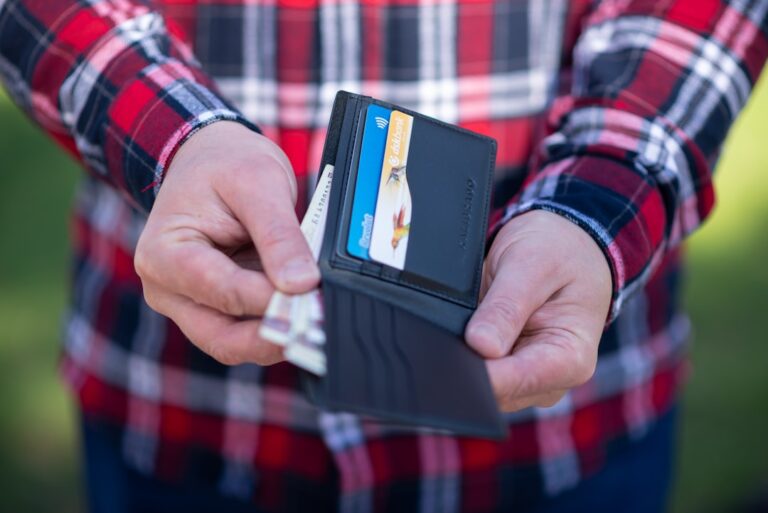
Photo by ANYA RICHTER on Unsplash
By The Money Floor Editorial Team · Source-verified · Last updated October 2026
You keep spending money you don’t have because your setup makes overspending easy and stopping hard. It’s not because you’re stupid or broken. This question is embarrassing to ask out loud, especially at 38 with a decent salary. You feel like you should know better by now. So you stay quiet, swipe the card, and promise yourself next month will be different. This post gives you the honest answers you’ve been too embarrassed to ask for, plus the exact steps to stop.
Key Takeaways
- Most people who overspend don’t lack willpower; they lack a buffer, a plan for irregular expenses, and friction between them and their money.
- Based on Federal Reserve data (via FRED) showing the average credit card APR at 21.19% as of August 2026, a $3,000 balance would cost about $53 a month in interest alone.
- This week, list every purchase from the last 30 days and move $20 into a separate savings account on payday.
- Cutting spending without a buffer usually fails, because the next “surprise” expense lands right back on the credit card.
Why Do You Keep Spending Money You Don’t Have?
The short answer: Spending money you don’t have usually comes from three things: no cash buffer, irregular bills you didn’t plan for, and spending that’s way too easy.
Overspending feels like a personal failing. But in most cases, it’s a design problem. Your money flows out faster than you can see it, and nothing slows it down.
Here’s the pattern for most people. Payday hits, bills go out, and a few hundred dollars sit in checking. That money feels like “available.” Then the car needs tires, a birthday comes up, and suddenly the card covers the gap.
And you’re far from alone. Americans saved just 4.1% of their disposable income as of August 2026, according to the BEA personal saving rate data (via FRED). Plenty of people with good incomes are running on fumes.
Is Something Wrong With Me?
The short answer: Almost certainly not. You’re a normal person responding to stress, convenience, and a system built to get you to buy.
Apps save your card number. Checkout takes one tap. Buy-now-pay-later shows up on every site. Companies spend billions to remove every pause between wanting something and owning it.
Meanwhile, nobody taught you how to plan for a $600 car repair. Most of us learned money by watching our parents, who were often guessing too. So you’re not behind because you’re careless. You’re behind because you were never handed the playbook.
That said, one honest exception exists. If you hide purchases, lie about spending, or feel a rush followed by shame, talk to a therapist. Compulsive buying is real, and it deserves real support, not just a budget.
Where Is the Money Actually Going?
The short answer: Mostly into small, forgettable purchases and “surprise” expenses that happen every single year.
Big purchases rarely sink people. Instead, it’s the $14 lunch, the $9 streaming add-on, and the $40 Target run that becomes $110. Each one feels too small to matter. Together, they can add up to a surprisingly large amount each month.
The 30-day receipt test
Pull up your bank and credit card statements for the last 30 days. Then sort every charge into three groups:
- Needs: rent, utilities, groceries, insurance, minimum payments
- Planned wants: things you chose on purpose and still feel good about
- Leaks: purchases you barely remember or regret
Someone doing this exercise for the first time is often surprised by how much shows up in the leaks column. Nobody’s asking you to cut all of it. However, you can’t fix a leak you haven’t found.
Inflation adds pressure too. Prices rose 4.0% year over year as of September 2026, per BLS consumer price data (via FRED). So the same habits that worked two years ago may quietly cost more today.
Why Do I Overspend When I’m Stressed or Tired?
The short answer: Spending gives you a quick hit of relief and control, and stressed brains grab the fastest relief available.
After a brutal workday, ordering dinner isn’t really about food. It’s about not making one more decision. Online shopping at 11 p.m. works the same way. The purchase is a reward for surviving the day.
Shaming yourself doesn’t fix this. Actually, it often makes it worse, because shame is stress, and stress drives more spending. A better move is replacing the reward with something cheaper, or adding a pause before you buy.
Three friction tricks that actually work
- Delete saved cards from Amazon, food delivery apps, and your browser. Typing 16 digits is a surprisingly good speed bump.
- Use a 24-hour rule for anything over $50 that isn’t a need. Put it in the cart and walk away.
- Unsubscribe from store emails. Every sale email is an ad designed to create a want you didn’t have.
Why Does the Credit Card Make It So Much Worse?
The short answer: Credit cards turn today’s spending into next year’s bill, with interest that quietly eats your future paychecks.
The average credit card APR sat at 21.19% as of August 2026, according to Federal Reserve data (via FRED). At that rate, carried balances get expensive fast.
The real math on a $3,000 balance
Here’s what a $3,000 balance costs you at 21.19% APR:
- $3,000 × 0.2119 = $635.70 in interest per year
- $635.70 ÷ 12 = about $53 per month
That’s $53 a month buying absolutely nothing. Worse, it shrinks next month’s paycheck, which makes you more likely to use the card again. This is the loop that traps people for years.
If you’re only paying the minimum, read our breakdown of how long minimum payments actually take to clear your debt. The timeline is usually shocking.
How Do I Stop Spending Money I Don’t Have?
The short answer: Build a small buffer first, plan for irregular bills second, and automate both so willpower isn’t doing the heavy lifting.
Willpower runs out by Thursday. Systems don’t. That’s why the fix isn’t “try harder.” Instead, it’s making the right move the default move.
| Factor | Willpower Approach | System Approach |
|---|---|---|
| How saving happens | Save whatever’s left at month’s end | Auto-transfer on payday |
| Surprise expenses | Go on the credit card | Paid from a sinking fund |
| Impulse buys | Resist in the moment | Friction added beforehand |
| Typical result after 3 months | Back where you started | A small, growing cushion |
Step 1: Build a $500 starter buffer
A $500 buffer breaks the card cycle for small emergencies. Saving $50 a week gets you there in 10 weeks. Keep it in a separate high-yield savings account like Ally or Marcus, so it’s not sitting next to your spending money.
Step 2: Plan for the “surprises” that aren’t surprises
Car registration, holiday gifts, and annual subscriptions happen every year. A sinking fund spreads those costs out monthly. Here’s a real example:
- Car maintenance: $600 per year
- Holidays and birthdays: $700 per year
- Car registration: $240 per year
- Annual subscriptions: $120 per year
- Total: $1,660 ÷ 12 = about $138 per month
Can’t do $138 yet? Start with one category. Our guide to sinking funds for beginners starting with just $20 a month walks you through it.
Step 3: Automate it on payday
Set your transfers to run the same day your paycheck lands. Money you never see in checking is money you won’t spend. Our guide on how to automate your finances before willpower runs out covers the exact setup.
What If I Can Only Do a Little?
The short answer: A little still counts, and $20 a week is a real starting point.
If your budget is truly tight, forget the perfect plan. Small amounts build the habit, and the habit matters more than the dollar figure right now. Here’s what different amounts add up to:
- $10 per week = $520 in one year
- $20 per week = $1,040 in one year
- $50 per week = $1,300 in six months
Be honest with yourself about the timeline, though. Breaking a paycheck-to-paycheck cycle takes steady effort over several months, and some months will take longer depending on income and irregular expenses. Some months will go sideways. That’s normal, not failure.
For free, plain-language help with budgeting and debt, the Consumer Financial Protection Bureau offers worksheets and tools at no cost.
Quick Start: What to Do This Week
You don’t need to fix everything by Sunday. Just do these five things over the next seven days:
- Monday: Run the 30-day receipt test and circle your three biggest leaks.
- Tuesday: Delete saved card info from your top two shopping or delivery apps.
- Wednesday: Open a free high-yield savings account separate from your checking.
- Thursday: Schedule an automatic $20 transfer for your next payday.
- Friday: List every irregular expense you can expect over the next 12 months.
Need a budgeting tool? YNAB works well, but it costs money after the free trial. A free spreadsheet or your bank’s built-in spending tracker does the job just fine.
Bottom Line
Bottom line: Spending money you don’t have is a system problem, not a character flaw. So stop trying to out-willpower a setup built against you. Instead, build a $500 buffer, plan for yearly expenses, and automate both on payday. It’ll take a few months. But you’re not too far behind to fix this, and the best day to start is today.
Frequently Asked Questions
Why do I spend money when I’m stressed?
Stress spending happens because buying something gives your brain quick relief and a sense of control. Tired, stressed people grab the fastest reward available, and one-tap checkout makes spending the fastest option. Adding friction, like deleting saved cards and using a 24-hour rule for purchases over $50, slows the cycle down.
How do I stop putting everyday expenses on my credit card?
Build a $500 cash buffer first, so small emergencies don’t land on the card. Saving $50 a week gets you there in about 10 weeks. Then add a sinking fund for predictable yearly costs like car repairs and holidays.
How much does carrying a credit card balance really cost?
At the average credit card APR of 21.19% as of August 2026 — per Federal Reserve data (via FRED) — a $3,000 balance would cost about $636 a year in interest. That works out to roughly $53 a month. Paying only the minimum can stretch repayment out for years.
How much should I save each month if I live paycheck to paycheck?
Start with $20 a week, which adds up to $1,040 in a year. The amount matters less than the habit at first. Automate the transfer on payday so the money leaves checking before you can spend it.
How long does it take to stop living paycheck to paycheck?
For most people in this position, building a small buffer that begins to break the cycle takes steady saving over several months, with the exact pace depending heavily on income stability and unexpected expenses. Saving $50 a week builds a $1,300 cushion in six months. Expect a few setbacks along the way, because irregular expenses will still pop up.
Is constant overspending a sign of a bigger problem?
For most people, overspending is a system problem, not a disorder. However, hiding purchases, lying about spending, or feeling a rush followed by shame can signal compulsive buying. In that case, talking to a licensed therapist is a smart step alongside budgeting.
Get Real Money Advice.
No get-rich-quick. No fluff. Just honest help with money — straight to your inbox.
Drop your email below. Weekly. No spam. Unsubscribe anytime. ↓