
Financial Checklist for Beginners: Your First 7 Steps
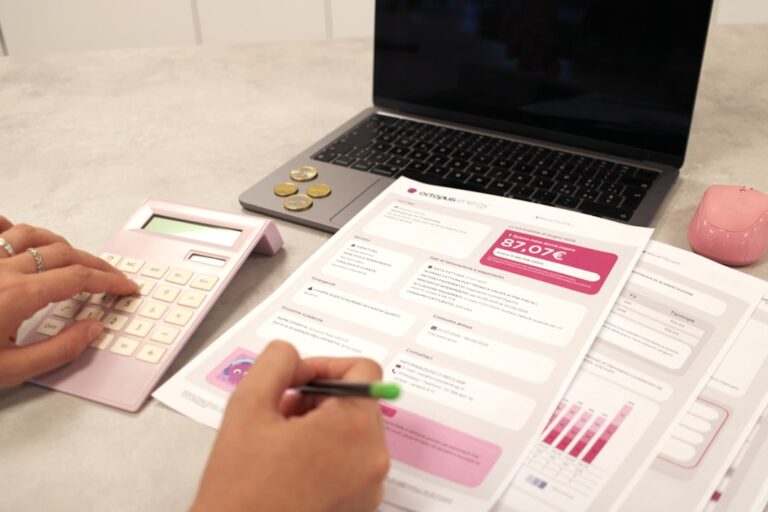
Photo by Content Pixie on Unsplash
By The Money Floor Editorial Team · Source-verified · Last updated June 2026
A solid financial checklist for beginners doesn’t start with investing. It starts with stopping the damage. If you’ve never had a real money plan, or if you had one and life blew it up, this is the post to bookmark. These seven steps are in order for a reason. You don’t need to do them all at once. But you do need to do them in sequence, because each one builds the foundation for the next.
Key Takeaways
- A beginner financial checklist has a specific order: stop the bleeding first, then build a buffer, then tackle debt, then invest.
- A starter emergency fund of $1,000 can be built in 10 weeks by setting aside just $100 per week — before you pay off a single dollar of debt.
- In 2026, the Roth IRA contribution limit is $7,000 per year (or $8,000 if you’re 50 or older), according to the IRS — you don’t need to max it out to benefit from it.
- The biggest mistake beginners make is trying to invest before they have an emergency fund, which forces them to pull money out at the worst possible time.
Why This List Exists
Most personal finance content is written for people who already have some money — if you want a full foundation from scratch, The Complete Beginner’s Guide to Personal Finance in 2026 is the place to start. It talks about optimizing, maximizing, and diversifying. That’s not useful when you’re starting from zero.
This post is for you if you have almost nothing saved, you’re not sure what to do first, and you feel like everyone else got a manual you never received. You didn’t miss some secret meeting. This stuff genuinely isn’t taught anywhere. So let’s just go through it, step by step, without the condescension.
Work through these seven steps in order. Skip ahead and you’ll end up building on an unstable base. Follow them straight through and you’ll have more financial stability in 12 months than most people build in a decade of winging it — and when you’re ready to go deeper, our personal finance checklist for 2026 gives you the full annual money reset.
Step 1: Know Your Actual Numbers
Before you can fix anything, you need to know what you’re dealing with. That means sitting down, once, and writing out three things: what comes in, what goes out, and what you owe.
Don’t guess. Pull your last two bank statements. Add up your actual monthly take-home pay. Then list every expense you can see. Many people discover they’re spending meaningfully more per month than they think they are — the gap between estimated and actual spending is usually where the problem lives. That gap is usually where the problem lives.
Also pull your credit report. You can do this for free at the Consumer Financial Protection Bureau’s recommended source. List every debt: the balance, the interest rate, and the minimum payment. Write it all down. This is the hardest step emotionally, but it takes less than an hour and it changes everything.
What you’re looking for:
- Monthly take-home income (all sources)
- Fixed expenses: rent, utilities, car payment, insurance, subscriptions
- Variable expenses: groceries, gas, eating out, random spending
- Every debt: balance, interest rate, minimum payment
- Current savings balance (even if it’s $0)
Step 2: Stop Any Active Bleeding
Before you build anything, you need to stop making it worse. This means identifying anything that’s draining money you don’t actually have — and cutting it, or pausing it, before you do anything else.
Common bleeds include subscriptions you forgot about, overdraft fees hitting monthly, buy-now-pay-later balances racking up interest, and payday loans. These aren’t moral failures. They’re expensive patches that got you through a hard time. But they compound fast, and they need to go first.
Cancel subscriptions you haven’t used in 30 days. If you’re regularly overdrafting, call your bank and ask them to disable overdraft “protection” (it’s not protection, it’s a $35 fee). If you have a payday loan, that becomes your most urgent debt payoff in Step 4.
Step 3: Build a $1,000 Starter Emergency Fund
A starter emergency fund is not your full emergency fund. It’s a firewall. The goal is to have $1,000 sitting in a savings account before you aggressively pay off debt. Without it, every unexpected expense goes back on a credit card and you never actually make progress.
$1,000 in 10 weeks is $100 per week. That’s $14.29 per day. If you can’t find $100 per week right now, look at what you can sell, pick up one extra shift, or follow these real steps to save money on a low income to cut one category dramatically for two months. This is a short-term sprint, not a forever budget.
Put this money in a high-yield savings account, not a regular bank savings account. Rates on high-yield savings accounts change with the federal funds rate, so check the current APY directly with any account you’re considering before you open it. Your money sitting at a traditional bank earns almost nothing. The difference isn’t huge at $1,000, but it builds a habit that matters a lot once your balance grows.
Step 4: Attack Your Debt with a Real Strategy
Once you have that $1,000 buffer, you shift focus to debt. This is where most people get stuck because they don’t have a method. They make minimum payments on everything and wonder why the balances never seem to move. Minimum payments are designed to keep you in debt longer. You need a payoff strategy.
There are two main methods. The debt avalanche targets the highest-interest debt first and saves you the most money over time. The debt snowball targets the smallest balance first and gives you faster psychological wins. Both work. The one you’ll actually stick to is better than the one you abandon.
Read the full breakdown in our guide on debt snowball vs. avalanche to figure out which fits your situation. But whichever you choose, here’s the core mechanic: make minimum payments on everything, then throw every extra dollar at one single target debt until it’s gone. Then roll that payment into the next one.
Quick example of the avalanche in action:
- Credit card A: $3,200 balance, 24% APR, $75 minimum
- Credit card B: $800 balance, 19% APR, $25 minimum
- Personal loan: $5,000 balance, 11% APR, $120 minimum
With the avalanche, you attack Card A first (highest rate), while paying minimums on everything else. When Card A is gone, you roll its payment into the loan. Systematic. Boring. Effective.
If you’re wrestling with whether to pay debt first or start investing, that’s a real question with a real answer. We cover it in depth in Pay Off Debt or Invest First. The short version: high-interest debt gets paid first — the specific rate where that calculation tips depends on what your investments are actually earning, so run the comparison with your own numbers. Always. If you’re looking for a more comprehensive roadmap to eliminate what you owe, Getting Out of Debt: The Complete Playbook for 2026 walks through the full process from start to finish.
Step 5: Build Your Full Emergency Fund
After your high-interest debt is gone, build your emergency fund up to three to six months of essential expenses. Not total expenses. Essential ones: rent, utilities, groceries, minimum debt payments, insurance.
For someone spending $2,800 per month on essentials, a three-month emergency fund is $8,400. Six months is $16,800. That feels impossible when you’re starting from zero. It’s not. At $400 per month, you hit $8,400 in about 21 months. It’s slow. It’s worth it.
Keep this money in a high-yield savings account or money market account that’s slightly inconvenient to access. You don’t want it in your checking account where you’ll spend it. You don’t want it locked in a CD where you can’t reach it in an emergency. A Marcus, Ally, or similar account works well. According to the FDIC, deposits at insured institutions are protected up to $250,000, so your emergency fund is safe.
Step 6: Start Investing — Even If It’s Small
Investing before you have an emergency fund is a mistake. But waiting until your finances feel “perfect” to start is also a mistake. Step 6 is where you begin, even if it’s $50 per month.
If your employer offers a 401(k) with a match, start there — though if you’re unsure whether to prioritize the match or your emergency fund first, that decision is worth thinking through carefully. The match is free money — usually 50 cents or a dollar for every dollar you contribute, up to a percentage of your salary. In 2026, the 401(k) contribution limit is $23,500 per year. You don’t need to hit that limit. Start with enough to get the full match. That’s your floor.
After the match, consider a Roth IRA. The Roth IRA contribution limit in 2026 is $7,000 per year ($8,000 if you’re 50 or older), according to the IRS. A Roth IRA grows tax-free, and you can withdraw your contributions (not earnings) at any time without penalty. That flexibility makes it a good fit for people earlier in their investing journey.
For what to actually invest in, total market index funds are the default answer for most beginners. Low fees, instant diversification, historically strong returns. Our index funds for beginners guide explains exactly how to buy your first one. Also, if you’re unsure whether a Roth or a 401(k) is better for your situation, start with Roth IRA vs. 401(k) before you decide.
What if you can only invest $50 per month?
Do it anyway. Put your own monthly amount and a realistic expected return into any compound-interest calculator and you’ll see how the math stretches over 25 years — the habit and the time horizon matter more than the starting dollar amount. That’s not retirement money by itself. But it builds the habit, and habits compound just like interest does.
Step 7: Protect What You’re Building
Once you have savings and a small investment account, you have something worth protecting. That means two things: insurance and a basic will.
On insurance, make sure you have health coverage (avoiding medical debt is financial survival), renter’s or homeowner’s insurance, and if anyone depends on your income, term life insurance. Term life is cheap. Term life premiums depend on your age, health history, and the insurer — get at least two or three quotes before you buy, because the spread between them can be significant. Whole life insurance sounds appealing but carries substantially higher premiums than term coverage for the same death benefit, which is why most people with straightforward protection needs choose term. Read the real breakdown in our guide to term vs. whole life insurance before you buy anything.
On estate basics: if you have a bank account, a retirement account, or a kid, you need a beneficiary designation on every account and a basic will. You don’t need a lawyer for a simple will. Online services can get it done for under $100. Without one, the state decides who gets your money. That’s never ideal.
Your 7-Step Financial Checklist at a Glance
| Step | Action | Do This First |
|---|---|---|
| 1 | Know your actual numbers | Pull bank statements + free credit report today |
| 2 | Stop active financial bleeding | Cancel unused subscriptions, call bank about overdraft |
| 3 | Build $1,000 starter emergency fund | Open a high-yield savings account this week |
| 4 | Pay off high-interest debt | Pick avalanche or snowball method and list your debts |
| 5 | Build 3-6 month full emergency fund | Automate a monthly transfer to high-yield savings |
| 6 | Start investing | Enroll in 401(k) to get full employer match |
| 7 | Protect what you’re building | Check beneficiary designations on every account |
What to Do This Week (Even If You’re Starting from Zero)
Pick one thing from this list and do it before Friday. Not the whole list. One thing.
If you have no idea where your money goes, that’s Step 1. Pull your last two bank statements tonight and add up what you spent in each category. That’s all. You don’t need a budgeting app — but if you want a full framework for managing what you find, our budgeting basics guide walks through exactly how to build one. You need the number on a piece of paper.
If you already know your numbers but have no savings buffer, that’s Step 3. Open a high-yield savings account and move whatever you can into it. Even $47. Starting is the thing. The amount matters less than the account existing.
Starting late doesn’t disqualify you from any of this. It just means you start today instead of five years ago. And today is still better than tomorrow.
Save this post. Forward it to the friend who just texted you asking where to start. This is the answer.
Frequently Asked Questions
What is the first thing I should do to get my finances together?
Start by writing down your actual income, every expense, and every debt with its interest rate. Most people underestimate their spending by a significant margin each month — which is exactly why pulling the actual bank statements, rather than going from memory, is the starting point. Knowing your real numbers is the foundation for everything else. You can pull your credit report for free through the CFPB’s recommended tools to see every debt in one place.
Should I build an emergency fund or pay off debt first?
Build a small $1,000 starter emergency fund first — then attack debt. Without that buffer, every unexpected expense goes right back onto a credit card and resets your progress. Once you have $1,000 set aside, shift all extra cash to your highest-interest debt until it’s gone — and if you’re weighing whether a secured card or credit-builder loan is the better tool to help along the way, our secured card vs. credit-builder loan comparison breaks down which option fits your situation.
How much should a beginner have in savings?
Start with a $1,000 emergency fund as your immediate goal. From there, work toward three to six months of essential expenses. For someone spending $2,800 per month on rent, utilities, groceries, and minimums, that means $8,400 to $16,800 in savings. Build it gradually — $400 per month gets you to $8,400 in about 21 months.
When should a beginner start investing?
Start investing once you have a $1,000 emergency fund and your high-interest debt (above 7% APR) is paid off. If your employer offers a 401(k) match, contribute enough to get the full match even before that — the match is free money — a guaranteed return equal to whatever your employer contributes, before any market movement at all. The 2026 401(k) contribution limit is $23,500, but you don’t need to come close to that to benefit.
What is a Roth IRA and should a beginner open one?
A Roth IRA is a retirement account where you contribute after-tax dollars and your money grows completely tax-free. In 2026, you can contribute up to $7,000 per year (or $8,000 if you’re 50 or older). It’s a strong choice for beginners because you can withdraw your contributions at any time without penalty, which provides flexibility during financially uncertain years.
What if I can only afford to save $50 per month right now?
Save the $50. Small amounts matter more than people realize, because they build the habit and the account. Put $50 per month into any compound-interest calculator with a realistic expected return and a 25-year window — the output will show you what time and consistency actually do, and it will be specific to whatever return you use. And your income and savings rate will almost certainly grow over time — and when they do, it helps to know what to do when you get a raise. Starting small today beats waiting until you can afford to start bigger. If you come into a lump sum at any point — like a bonus or a tax refund — check out our guide on what to do with your tax refund to put that money to work the right way.
Get Real Money Advice.
No get-rich-quick. No fluff. Just honest help with money — straight to your inbox.
Drop your email below. Weekly. No spam. Unsubscribe anytime. ↓